

 Spanish
  English
  Russian
  German
  Arabic
  Italian
  Portuguese
  French
  Greek
Greek  Polish
  Swedish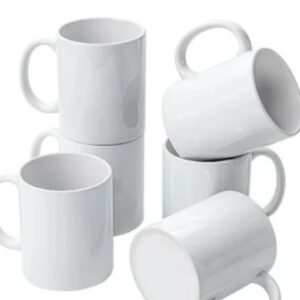
Abstract
The inquiry into a “standard mug size” reveals a concept that is more fluid and context-dependent than fixed. This analysis examines the common volumes and physical dimensions of beverage mugs, particularly within the contexts of personal use, commercial production, and the specialized field of dye-sublimation printing. While an 11 to 12-ounce (approximately 325 to 355 milliliters) ceramic mug is widely regarded as a de facto standard in homes and for promotional purposes, a comprehensive understanding requires exploring a spectrum of sizes, from the 2-ounce espresso demitasse to the 20-ounce travel mug. The investigation considers how material composition, ergonomic design, and intended function—be it for coffee, tea, soup, or as a marketing tool—collectively influence a mug’s dimensions. Furthermore, the relationship between mug size and the technical requirements of sublimation printing is explored, highlighting how surface area and shape impact design transfer and final product quality. The determination of an appropriate mug size is ultimately a function of individual ritual, consumer preference, and specific industrial application.
Key Takeaways
- The 11-12 oz mug is the most common and versatile option for general use and promotional products.
- Mug size directly impacts its function, from small 3 oz espresso shots to large 20 oz travel containers.
- For sublimation, understanding what is a standard mug size helps in choosing the right equipment and designs.
- Material composition, including ceramic, glass, and metal, affects heat retention, durability, and aesthetics.
- Consider the user’s daily beverage habits when selecting the perfect personal or gift mug.
- Larger mugs (15 oz+) are gaining popularity for those who prefer more generous servings of coffee or tea.
- Ergonomics, such as handle shape and rim thickness, are just as vital as volume for the overall experience.
Table of Contents
- The Quest for the “Standard Mug”: A Cultural and Practical Overview
- The Anatomy of a Mug: More Than Just Volume
- Unpacking the 7 Common Mug Sizes for 2025
- The Impact of Size on the Sublimation Process
- Selecting the Perfect Mug Size: A Buyer’s Framework
- The Future of Mug Design: Trends for 2025 and Beyond
- FAQ: Your Mug Size Questions Answered
- Conclusion
- References
The Quest for the “Standard Mug”: A Cultural and Practical Overview
When we pose the question, “what is a standard mug size?”, we embark on a line of inquiry that reveals as much about our cultural habits and personal rituals as it does about manufacturing specifications. The notion of a “standard” is, in itself, a fascinating human construct—an attempt to find a common denominator in a world of infinite variation. In the context of the humble mug, this standard is not a single, universally mandated measurement but rather a convergence of historical convention, practical utility, and commercial prevalence. To truly understand it, we must peel back the layers of its function, its history, and its role in our daily lives.
The Elusive Nature of “Standard”
Imagine walking into a hundred different homes across the United States, Russia, and Europe and asking to see a coffee mug. You would be presented with a dazzling array of shapes, materials, and, most importantly, sizes. Some would be short and stout, others tall and slender. Some would hold a modest amount of liquid, barely enough for a few satisfying gulps, while others would be cavernous vessels designed for long, contemplative mornings. This simple thought experiment demonstrates that a single, rigid standard does not exist in practice.
However, if we shift our perspective from the individual kitchen cabinet to the world of commercial production, a pattern begins to emerge. Manufacturers, particularly those in the promotional products and restaurant supply industries, have gravitated toward certain dimensions for reasons of efficiency, cost-effectiveness, and broad market appeal. It is within this commercial sphere that the 11-ounce (oz) to 12-ounce mug has risen to prominence, becoming what many would consider the default or “standard” size. This capacity offers a satisfying portion of coffee or tea for the average consumer, accommodates additions like milk or sugar, and provides an ideal canvas for printed logos and designs. It is the workhorse of the mug world—reliable, familiar, and economically viable to produce on a mass scale.
From Ounces to Milliliters: Navigating Volume Measurements
The discussion of size is immediately complicated by the language of measurement itself. The “ounce” is not a uniform unit globally. In the United States, volume is typically measured in US fluid ounces (fl oz), where one fluid ounce is approximately 29.57 milliliters (ml). In the United Kingdom and other parts of Europe that still reference imperial units, the imperial fluid ounce is slightly smaller, at about 28.41 ml. While this difference may seem trivial, it can lead to discrepancies. For the sake of clarity and international understanding, which is paramount in global trade, converting to milliliters provides a more precise and universal metric.
Here is a quick conversion for context:
- 8 oz mug: approx. 237 ml
- 11 oz mug: approx. 325 ml
- 12 oz mug: approx. 355 ml
- 15 oz mug: approx. 444 ml
- 20 oz mug: approx. 591 ml
It is also a point of common confusion that a mug advertised as “11 oz” may not hold exactly 11 fluid ounces when filled to the very brim. This measurement usually refers to a comfortable, practical capacity, leaving a small amount of space to prevent spillage. Think of it as the usable volume, not the absolute maximum capacity. Understanding this distinction is crucial for both consumers managing their caffeine intake and for businesses, such as cafes, aiming for consistent portion control.
Why Size Matters: Functionality, Aesthetics, and Personal Ritual
The size of a mug is not a trivial detail; it is intrinsically linked to its purpose and the experience it facilitates. A small, 3-ounce demitasse is designed for the quick, intense pleasure of an espresso shot. Its size concentrates the aroma and preserves the delicate crema. Using a large 15-ounce mug for the same purpose would be absurd—the espresso would cool instantly, and the sensory experience would be lost.
Conversely, the person who enjoys a long, leisurely morning with a large “cà phê au lait” or a heavily-steeped herbal tea would find an 8-ounce mug frustratingly inadequate, requiring constant refills. The larger 15-ounce or even 20-ounce mug becomes a companion, a warm presence that lasts through a chapter of a book or the first half of a work meeting.
Aesthetics also play a significant role. The proportions of a mug—the ratio of its height to its diameter—contribute to its visual appeal. A tall, narrow mug can feel elegant and modern, while a short, wide mug can evoke a sense of coziness and tradition. The size dictates the “canvas” available for decoration, a critical consideration in the world of sublimation printing, where a larger surface area allows for more complex and impactful designs. The choice of a mug size is, therefore, an act of balancing practical needs with the deep, often unspoken, human desire for objects that are not only useful but also beautiful and emotionally resonant.
The Anatomy of a Mug: More Than Just Volume
To focus solely on fluid ounces is to miss half the story. The essence of a good mug lies in a holistic combination of features, where volume is but one component. The material it is made from, the curve of its handle, the thickness of its rim—these elements work in concert to create the final user experience. A deep appreciation for what makes a mug right for its purpose requires an anatomical examination, moving beyond simple capacity to the subtleties of its physical form.
Material Matters: Ceramic, Glass, Metal, and Beyond
The choice of material is perhaps the most fundamental decision after size. It governs a mug’s thermal properties, durability, weight, and aesthetic possibilities.
- Ceramic: The quintessential mug material. This broad category includes earthenware, stoneware, and porcelain. Ceramics are prized for their excellent heat retention, keeping beverages warm without making the exterior uncomfortably hot to the touch. They are relatively inexpensive to produce, weighty enough to feel substantial, and offer a perfect surface for glazing and printing. For the sublimation industry, specially coated tazas de cerámica de sublimación are the gold standard, as the polymer coating is engineered to bond with sublimation inks, resulting in vibrant, permanent images (Mecolour, 2023).
- Glass: Glass mugs offer a unique visual appeal, allowing the user to appreciate the color and clarity of their beverage. They are non-porous and do not retain flavors, providing a pure taste. However, standard glass is a poorer insulator than ceramic, meaning drinks can cool more quickly. Borosilicate glass, a type used in laboratory equipment, offers much better thermal shock resistance and improved insulation. Like ceramics, glass can be coated for sublimation, creating stunning, semi-translucent designs.
- Stainless Steel: Predominantly used for travel mugs, stainless steel is valued for its supreme durability and excellent insulating properties, especially when constructed with a double wall and a vacuum seal. These mugs can keep drinks hot or cold for hours. They are lightweight and shatterproof, making them ideal for commuting or outdoor activities. Sublimation on polymer-coated metal produces a distinct, often glossy finish.
- Enamel: Enamelware mugs consist of a steel or cast iron base coated in a layer of porcelain enamel. This creates a rustic, retro aesthetic reminiscent of camping and country kitchens. They are incredibly durable and lightweight, though they can chip if dropped, exposing the metal underneath. Their heat transfer is quite high, meaning the mug itself can get very hot.
| Material | Heat Retention | Durabilidad | Weight | Sublimation Suitability | Aesthetic |
|---|---|---|---|---|---|
| Porcelain/Stoneware | Excellent | Good (can chip/shatter) | Medium-Heavy | Excellent (with coating) | Classic, versatile |
| Glass | Fair to Good | Fair (can shatter) | Medium | Good (with coating) | Modern, transparent |
| Stainless Steel | Superior (double-walled) | Excellent (shatterproof) | Light-Medium | Excellent (with coating) | Sleek, functional |
| Enamel | Poor to Fair | Very Good (can chip) | Light | Good (with coating) | Rustic, retro |
Handle Design and Ergonomics
The handle is the primary point of interaction between the user and the mug. Its design can make the difference between a comfortable, secure grip and an awkward, strained one. A well-designed handle should allow two or three fingers to fit comfortably, distributing the weight of the mug evenly. The “C-shaped” handle is the most common, but variations abound. Some handles are more squared, others are fully circular, and some mugs, particularly those in a Japanese yunomi style, have no handle at all, requiring the drinker to cradle the vessel in their hands. The placement of the handle, its thickness, and the smoothness of its curves are all micro-details that contribute to the macro-experience of comfort.
Rim Thickness and the Sipping Experience
Consider the moment the mug meets your lips. The thickness and shape of the rim mediate this interaction. A very thick, rounded rim can feel clumsy, causing liquid to dribble. A thin, slightly tapered rim, on the other hand, can feel more elegant and deliver the liquid to your palate more precisely. This is why fine porcelain teacups often have very delicate rims, while rugged diner mugs have thick, sturdy ones designed for durability over delicacy. The texture of the glaze on the rim also matters—it should be perfectly smooth and free of imperfections.
Base and Stability
The base of the mug determines its stability. A narrow base on a tall mug creates a high center of gravity, making it prone to tipping. A wider, heavier base provides a solid foundation, which is especially important in bustling environments like an office or a workshop. Some mugs feature an unglazed, sanded foot ring, which prevents the glazed bottom from scratching tabletops, while others are fully glazed. The design of the base is a quiet but vital element of a mug’s overall functionality.
Unpacking the 7 Common Mug Sizes for 2025
While the “standard” is a moving target, we can identify a set of consistently popular sizes that serve distinct purposes. Understanding this spectrum is the key to selecting the perfect vessel for any occasion, whether you are a business choosing a promotional item or an individual curating your personal collection. Let’s explore the seven most prevalent sizes you will encounter in 2025.
1. The Classic Diner Mug (8-10 oz): Nostalgia in Your Hands
Holding an 8- to 10-ounce (approx. 237-296 ml) diner mug is like holding a piece of Americana. Its thick, heavy-walled ceramic construction was designed for durability in the high-traffic environment of a 20th-century diner. The primary goal was heat retention and the ability to withstand countless cycles through an industrial dishwasher. The shape is typically short and wide with a very sturdy handle.
This mug is not about large volumes; it is about the ritual of the “bottomless” cup of coffee, where a server is always nearby with a fresh pot. It is perfect for a strong, straightforward black coffee or a traditional tea. For sublimation, its classic shape offers a wonderful canvas for retro designs, vintage logos, or witty sayings that play on its nostalgic appeal. The thick walls ensure an even heat distribution during the pressing process, leading to consistent results.
2. The Universal Standard (11-12 oz): The Go-To for Homes and Offices
This is the size that most people picture when they hear the word “mug.” At 11 to 12 ounces (approx. 325-355 ml), it hits the sweet spot for the vast majority of hot beverage drinkers. It provides ample room for a standard serving from a pod-based coffee machine or a generous pour from a teapot, with enough extra space for milk, cream, or a dollop of foam.
Its ubiquity makes it the undisputed king of the promotional products industry. The surface area is large enough for a company logo and a short message, but the mug remains small and light enough to be cost-effective to produce and ship in bulk. For sublimation businesses, the 11 oz mug is the foundational product. Mug presses are almost universally designed around its dimensions, and a vast market exists for personalized versions, from photo mugs to custom-designed gifts. It is the perfect blank slate, a reliable and universally accepted format. For instance, creating a matching pair of custom 11oz couple mugs is a popular and heartfelt gift idea built around this industry-standard size.
3. The Generous Pour (15-16 oz): For the Serious Drinker
As our desire for larger, more elaborate coffee creations has grown, so has the popularity of the 15- to 16-ounce (approx. 444-473 ml) mug. This size caters to those who find the 11 oz portion a bit lacking. It is the ideal vessel for a large latte or cappuccino, a big bowl of hot chocolate topped with whipped cream, or even a serving of soup or chili.
In a home setting, this mug often becomes a personal favorite—”my mug.” Its generous capacity means fewer trips to the coffee pot. For sublimation, the larger printable area is a significant advantage, allowing for panoramic photos, more detailed artwork, or longer text passages. While it requires a slightly larger heat press or a different wrap, the results can be incredibly impactful, transforming the mug from a simple beverage holder into a statement piece.
4. The Tall Latte Mug (16-17 oz): Elegance and Layers
Distinct from the wider 15 oz mug, the tall latte mug, often holding 16 to 17 ounces (approx. 473-503 ml), features a more slender, tapered design. This shape is not purely for aesthetics; it is functional. The height allows a barista to properly pour steamed milk to create layered drinks like a latte macchiato, showcasing the distinct bands of espresso, milk, and foam.
For the user, it can offer a different tactile experience, often held with two hands. The tapered shape can be a challenge for some sublimation heat presses, which are designed for straight-walled mugs. To properly print on these, a specialized latte mug press with a conical heating element or a flexible silicone wrap used with a convection oven is necessary. The unique shape, however, provides a premium look and feel that can set a product apart.
5. The Travel Mug (16-20 oz): Your Beverage Companion
The travel mug is a category defined by function over a single form. Ranging typically from 16 to 20 ounces (approx. 473-591 ml), its primary purpose is portability and insulation. The most effective models are made from double-walled, vacuum-insulated stainless steel, which can keep beverages hot for up to 6-8 hours.
Key features include a secure, spill-resistant lid, a base designed to fit in a standard car cup holder, and an ergonomic shape that is easy to grip. Some have handles, while others are handleless to be more streamlined. Sublimation on stainless steel travel mugs is a rapidly growing market. The process is similar to ceramic sublimation but may require slightly different time and temperature settings. The final product is a durable, highly practical item that carries a brand or personal message into the world.
6. The Espresso Mug/Demitasse (2-4 oz): Small but Mighty
At the opposite end of the size spectrum lies the demitasse cup, holding a mere 2 to 4 ounces (approx. 59-118 ml). “Demitasse” is French for “half-cup,” and its purpose is singular: to serve a shot of espresso or a rich Turkish coffee. The small volume is intentional. It ensures the espresso is consumed quickly before the crema dissipates and the temperature drops.
Despite its small size, the demitasse is a canvas for intricate design. Sublimating on such a small surface requires precision and often a specialized press attachment. They are often sold in sets and can be seen as luxury items, perfect for high-end coffee shops, restaurants, or as a sophisticated gift for a coffee connoisseur.
7. The Oversized “Soup” Mug (20-24 oz+): A Bowl in Disguise
Blurring the line between mug and bowl, the oversized mug holds 20 ounces (approx. 591 ml) or more. While it can certainly hold a massive amount of coffee or tea, its wide mouth and large capacity make it exceptionally versatile. It is perfect for a hearty serving of soup, chili, oatmeal, or even a personal-sized portion of mac and cheese.
These mugs often feature two handles for stable lifting or a single, very robust handle. For sublimation, they offer a vast landscape for creative expression. A full-wrap design on a 24-ounce mug can be a stunning piece of art. They make excellent novelty gifts and are popular in settings where comfort and generous portions are valued.
| Mug Size (US oz) | Approx. Volume (ml) | Common Uses | Best For Sublimation | Target User |
|---|---|---|---|---|
| 2-4 oz | 59-118 ml | Espresso, Turkish coffee | Intricate, small logos; requires precision | The Coffee Purist |
| 8-10 oz | 237-296 ml | Black coffee, diner-style service | Retro designs, simple branding | The Traditionalist |
| 11-12 oz | 325-355 ml | Coffee with milk, tea, hot chocolate | All-purpose; promotional products, photos | The Everyday Drinker |
| 15-16 oz | 444-473 ml | Large lattes, soup, cereal | Panoramic images, detailed art | The Enthusiast |
| 16-17 oz (Latte) | 473-503 ml | Layered coffee drinks | Specialized designs; requires tapered press | The Home Barista |
| 16-20 oz (Travel) | 473-591 ml | Commuting, outdoor activities | Durable branding, full-wrap patterns | The On-the-Go Professional |
| 20-24 oz+ | 591-710+ ml | Soup, chili, oatmeal, large drinks | Large-format graphics, novelty gifts | The Comfort Seeker |
The Impact of Size on the Sublimation Process
For anyone involved in personalizing or producing custom mugs, the relationship between mug size and the sublimation process is of paramount importance. Sublimation is a remarkable technology that allows for the creation of full-color, permanent, and photorealistic images on receptive surfaces. However, achieving flawless results is a science that requires a keen understanding of how a mug’s dimensions interact with heat, pressure, and ink.
What is Sublimation? A Brief Primer
Let’s demystify the process. Sublimation printing is not like using an inkjet printer to print on a surface. Instead, it is a process of infusion. It begins with a design printed onto a special transfer paper using sublimation inks. When this paper is wrapped around a polymer-coated mug and subjected to high heat and pressure in a mug press, a fascinating transformation occurs. The solid ink particles on the paper turn directly into a gas—skipping the liquid phase entirely—and permeate the polymer coating on the mug’s surface. As the mug cools, the gas turns back into a solid, becoming permanently embedded within the coating (Ricoma, 2024).
This is why you cannot perform sublimation on just any mug from a store. It must have this special, receptive polymer coating that opens its pores under heat to accept the ink (Topsub, 2025). The result is not a layer on top of the mug, but a design that is in the mug. It will not fade, peel, or crack under normal use and is typically dishwasher-safe.
Choosing the Right Mug Size for Your Project
The size and shape of the mug you choose directly influence the design possibilities and the technical execution of the sublimation.
- Surface Area and Design Complexity: A larger mug, such as a 15 oz or 20 oz model, provides a bigger canvas. This is ideal for panoramic landscape photos, intricate artistic patterns, or collages. A smaller 11 oz mug is better suited for more focused designs, like a single logo, a portrait, or a concise block of text. Trying to cram a complex panoramic image onto a small mug can result in a design that feels crowded and loses its impact.
- The 11 oz Mug as the Sublimation Benchmark: The 11 oz straight-walled ceramic mug is the industry’s workhorse for a reason. Its dimensions are standardized, and the vast majority of tabletop mug presses are engineered to provide perfect, even heat and pressure to its surface. For anyone beginning their journey in sublimation, mastering the 11 oz mug is the first and most critical step. Its predictable surface makes it the most reliable choice for achieving consistent, high-quality transfers.
- Challenges with Non-Standard Shapes: Moving away from the standard 11 oz mug introduces new variables.
- Tapered Mugs: As mentioned with latte mugs, a standard cylindrical press will not make proper contact with a conical surface. This results in faded or blurry areas where the pressure was insufficient. A special tapered heating element is required.
- Oversized Mugs: A 20 oz mug may be too tall or have too large a diameter for a standard press. In these cases, silicone wraps combined with a convection oven are often a better solution, as the wrap can conform to the shape and the oven provides consistent, all-over heat.
- Small Mugs: A 3 oz demitasse may be too small for a standard press to clamp onto securely. Special attachments or wraps are needed to handle these miniature sizes.
Equipment Considerations: Mugs Presses and Wraps
Your choice of mug size is intrinsically linked to your equipment capabilities. A standard cylindrical mug press is an excellent and efficient tool for producing 11 oz and 15 oz straight-walled mugs. If you plan to offer a wider variety of sizes and shapes, your business will need to invest in a more versatile set of tools. This might include a multi-function press with interchangeable heating elements for different diameters and tapers, or a dedicated convection oven and a collection of silicone wraps for various mug dimensions. The key to a perfect sublimation transfer is the trinity of time, temperature, and even pressure. Any mismatch between the mug’s size and the equipment’s capability will compromise one of these three elements and lead to a suboptimal result.
Selecting the Perfect Mug Size: A Buyer’s Framework
The path to choosing the right mug is paved with self-reflection and consideration for its ultimate purpose. There is no single “best” size, only the size that is best for a specific person and a specific situation. Whether you are buying for yourself, as a gift, or for your business, asking the right questions can lead you to the ideal choice.
For Personal Use: Reflecting on Your Daily Ritual
Your personal mug is more than just a dish; it is a part of your daily routine. It is often the first thing you reach for in the morning and can be a source of comfort throughout the day. To find your perfect match, consider your habits.
- What is your primary beverage? A strong, dark roast coffee might be best enjoyed in a classic 8-10 oz diner mug that encourages savoring a smaller portion. A frothy, milky latte, however, needs the volume of a 15-16 oz mug to accommodate its airy texture. A dedicated herbal tea drinker might prefer a tall 12-16 oz mug that keeps the tea warm for longer.
- How do you drink it? Do you drink your coffee quickly while standing in the kitchen, or do you take your mug to your desk to sip on for an hour? If you are a sipper, a larger mug made from a material with good heat retention, like stoneware, is ideal. If you are a gulper, a smaller mug might suffice.
- Think about the physical experience. Do you like the feeling of a heavy, substantial mug in your hands, or do you prefer something lighter? Do you like to wrap your hands around the body of the mug to feel its warmth, or do you always use the handle? These tactile preferences will guide you toward a specific size and shape.
For Gifting: Considering the Recipient’s Lifestyle
When giving a mug as a gift, the goal is to provide something the recipient will actually use and cherish. This requires a bit of empathetic investigation into their life and preferences.
- Observe their environment. Does the person work in a busy office, or do they work from home? An office worker might greatly appreciate a high-quality 16-20 oz travel mug for their commute or a stable, hard-to-tip 15 oz mug for their desk. A person who works from home might enjoy a more artisanal, oversized mug for a cozier experience.
- Match the mug to their personality. A minimalist might love a sleek, handleless porcelain mug, while someone with a bold, colorful personality might adore a large, brightly sublimated 20 oz soup mug. A thoughtful gift, like a set of matching mugs for a couple, demonstrates a deeper level of consideration for their relationship.
- Personalization is key. The true power of a gifted mug often lies in its personalization. Choosing a size that best fits the intended design is crucial. A beautiful landscape photo from a shared vacation will look stunning on a 15 oz mug, while a witty inside joke might be perfect for a standard 11 oz mug.
For Businesses and Promotions: Maximizing Brand Impact
For a business, a promotional mug is a miniature billboard that a customer willingly brings into their home or office. It offers daily brand exposure, making the choice of size a strategic marketing decision.
- The Power of the 11 oz Standard: There is a reason the 11 oz mug is the king of promotional items. It offers the best balance of visibility, utility, and cost. It is inexpensive to source and print in bulk, and its standard size ensures it will be used by the widest possible audience. It is a safe, effective, and reliable choice for large-scale giveaways and corporate branding.
- Using Size to Convey Value: Giving away a larger, 15 oz or 16 oz mug can signal a higher perceived value. It feels more substantial and generous, making it an excellent choice for a premium gift to important clients or as a “thank you” for a significant purchase. A high-quality, sublimated travel mug takes this a step further, providing a genuinely useful tool that associates your brand with quality and practicality.
- Budget vs. Impact: The decision often comes down to budget versus desired impact. A campaign aimed at mass-market exposure will benefit from the cost-effectiveness of the standard mug size. A campaign targeting a smaller, high-value audience may see a better return on investment by choosing a larger or more specialized mug that leaves a lasting impression of quality and thoughtfulness.
The Future of Mug Design: Trends for 2025 and Beyond
The world of mug design is surprisingly dynamic. While classic shapes will always have their place, new technologies, changing consumer values, and evolving aesthetic preferences are shaping the mugs of tomorrow.
Sustainable and Eco-Friendly Materials
As environmental consciousness grows, so does the demand for products made from sustainable materials. In the mug world, this trend is manifesting in several ways. We are seeing an increase in mugs made from recycled ceramics, bamboo fiber, and other plant-based composites. These materials offer a new aesthetic and a compelling story for eco-conscious consumers and brands. The challenge lies in ensuring these materials are durable, food-safe, and, for the personalization industry, compatible with printing technologies like sublimation.
Smart Mugs and Temperature Control
The integration of technology into everyday objects has reached the coffee mug. “Smart mugs” featuring active heating elements powered by rechargeable batteries can maintain a beverage at a user-selected temperature for hours. While currently a niche, premium product, the technology is likely to become more accessible over time. This represents a fusion of the traditional ceramic vessel with modern electronics, fundamentally changing the user experience from passive heat retention to active temperature management.
Artisanal and Handcrafted Aesthetics
In a world of mass production, there is a powerful counter-trend toward objects that feel unique and handcrafted. This is driving the popularity of mugs with speckled glazes, organic shapes, visible throwing rings, and other imperfections that signal they were made by a human hand (MT Ceramic, 2024). Even in mass-produced items, finishes that mimic these artisanal qualities are becoming more common. For sublimation, this could mean printing designs that replicate the look of a handmade glaze or pairing a clean, modern design with a more rustic-shaped mug.
Hyper-Personalization through Advanced Sublimation
Sublimation technology itself continues to advance. Improvements in printers, inks, and coatings are allowing for even more vibrant colors, finer details, and new special effects like glitter or fluorescent finishes. The future is not just about putting a photo on a mug, but about creating a fully bespoke object. This could involve 3D printing textures onto a mug before sublimation or using software to seamlessly map complex patterns across unconventional shapes. As the tools for creation become more sophisticated, the mug will evolve from a simple container to a deeply personal form of self-expression.
FAQ: Your Mug Size Questions Answered
1. What is the most common mug size? The most widely recognized and produced mug size is the 11-ounce (approx. 325 ml) mug. It offers a perfect balance of capacity for a standard serving of coffee or tea, a comfortable size for holding, and an ideal surface area for promotional logos and personal designs, making it the go-to choice for homes, offices, and the printing industry.
2. How many ml is a standard 11 oz mug? A standard 11 US fluid ounce mug holds approximately 325 milliliters (ml). It is helpful to use milliliters for a more precise, universal measurement, as the value of a “fluid ounce” can differ slightly between measurement systems (e.g., US vs. UK Imperial).
3. Is a bigger mug always better? Not necessarily. The “best” mug size is entirely dependent on its intended use. A larger mug (15 oz or more) is excellent for those who enjoy large volumes of coffee, lattes, or even soup. However, for a beverage like espresso, a small 2-4 oz demitasse is essential to preserve the temperature and crema. A bigger mug is only better if it fits the drinking habits and beverage choice of the user.
4. What size mug is best for sublimation printing? The 11 oz straight-walled ceramic mug is the industry benchmark for sublimation. Most standard mug heat presses are designed for its dimensions, making it the easiest and most reliable size for achieving consistent, high-quality prints. However, larger sizes like the 15 oz mug are also popular as they provide a bigger canvas for more complex or panoramic designs.
5. How is a mug’s capacity measured? A mug’s advertised capacity (e.g., “11 oz”) typically refers to its practical or comfortable fill volume, not the absolute maximum volume if filled to the very brim. This leaves a safe margin to prevent spills. This is an important distinction for both portion control in a commercial setting and for managing expectations as a consumer.
6. Can I use any ceramic mug for sublimation? No, you cannot. A mug must be treated with a special polymer coating to be suitable for sublimation. During the heating process, this coating’s pores open to absorb the gaseous sublimation ink. A standard, uncoated ceramic mug lacks this receptive layer, and the ink will not transfer to it. Always ensure you are purchasing mugs specifically designated for sublimation.
7. What is the difference between a mug and a cup? Generally, a mug is a type of cup that is larger, sturdier, and almost always has a handle. Mugs are typically used for hot beverages like coffee, tea, or hot chocolate in informal settings. A “cup” can be a more general term. Teacups, for example, are often smaller, more delicate, made of fine porcelain, and are served with a saucer. The line can be blurry, but mugs are defined by their robust, everyday utility.
Conclusion
The search for a single standard mug size ultimately leads us to a more nuanced appreciation of the object itself. While the 11-ounce mug stands as a commercial and practical benchmark, the reality is that the ideal size is a personal and contextual choice. It is a decision shaped by the quiet rituals of our mornings, the functional demands of our daily lives, and the creative aspirations of designers and businesses. The journey through the various capacities, from the tiny demitasse to the cavernous soup mug, reveals a spectrum of possibilities, each designed to perfect a particular experience. Understanding this landscape—the interplay of volume, material, ergonomics, and aesthetics—empowers us to choose not just a mug, but the right mug. It is a vessel that does more than hold a liquid; it holds a moment of comfort, a jolt of energy, or a message meant to be shared, making the simple act of choosing its size a surprisingly meaningful endeavor.
References
Mecolour. (2023, September 19). How to choose the best coffee mugs for sublimation? Mecolour. https://www.mecolour.com/best-coffee-mugs-for-sublimation/
Mecolour. (2023, December 19). Sublimation ceramic vs. glass mugs: How to choose? Mecolour. https://www.mecolour.com/sublimation-ceramic-vs-glass-mugs/
MT Ceramic. (2024, November 19). Top ceramic mug styles & designs trending in 2025. https://mtceramic.com/top-ceramic-mug-styles-2025/
Ricoma. (2024, April 17). What is sublimation mug printing? Ricoma Blog. https://blog.ricoma.com/2024/04/17/sublimation-mug-printing/
SubliGenius Print. (2024, July 30). How I choose the best sublimation blanks and substrates. https://subligeniusprint.com/sublimation-blanks-and-substrates/
Topsub. (2025, July 23). What are the differences between coated and uncoated ceramic mugs?https://www.topsub.cn/what-are-the-differences-between-coated-and-uncoated-ceramic-mugs/