

 Polish
  English
  Spanish
  Russian
  German
  Arabic
  Italian
  Portuguese
  French
  Greek
Greek  Swedish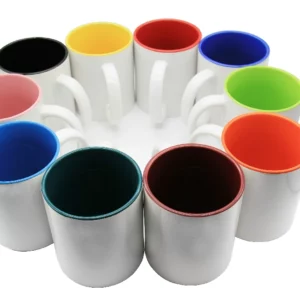
Abstract
The determination of a coffee mug’s volume, measured in fluid ounces (oz), presents a question of greater complexity than it initially suggests. Standardized sizing is not governed by a universal regulation but is instead dictated by a confluence of cultural norms, consumer preferences, manufacturing practices, and intended marketing applications. This analysis examines the multifaceted nature of coffee mug capacity, moving beyond a simplistic numerical answer. It investigates the historical evolution of drinking vessels, the critical distinction between US customary and British imperial fluid ounces, and the material properties that influence a mug’s functional volume. The most prevalent commercial sizes—ranging from 8 oz to over 20 oz—are categorized and explored in the context of their suitability for different beverages and markets, particularly within the United States, Europe, and Russia. For businesses in the promotional products and sublimation industries, a nuanced understanding of these variations is fundamental for making informed purchasing decisions that align with specific consumer behaviors and enhance the perceived value of the final product.
Key Takeaways
- The “standard” coffee mug size typically falls between 11 and 15 ounces.
- Understand the difference between the US fluid ounce (29.57 ml) and the Imperial fluid ounce (28.41 ml).
- Mug material and wall thickness directly impact the internal liquid capacity.
- Consider regional coffee culture when selecting mug sizes for international markets.
- The ideal promotional mug balances volume with a large, smooth surface for printing.
- Researching how many oz in a coffee mug is a strategic choice for product development.
- The perceived value of a promotional mug is influenced by its size and ergonomics.
Table of Contents
- The Deceptive Simplicity of a “Standard” Coffee Mug
- A Buyer’s Taxonomy: The Most Common Mug Capacities
- Material Science and Volume: How Mug Composition Affects Capacity and Use
- The Global Consumer: Adapting Mug Sizes for International Markets
- Beyond Volume: Sublimation Success and Perceived Value
- Frequently Asked Questions (FAQ)
- Conclusion
- References
The Deceptive Simplicity of a “Standard” Coffee Mug
When we pose the question, “how many oz in a coffee mug?”, we are not merely asking for a number. We are, in fact, probing into a rich tapestry of history, physics, culture, and commerce. The vessel from which we drink our morning coffee is not a product of simple chance; it is a cultural artifact shaped by centuries of tradition and decades of market forces. Its capacity is a reflection of how we live, what we value, and how we consume. For a business operating in 2025, especially one involved in the creation of customized and sublimated goods, grasping the nuances of this seemingly simple query is an exercise in market intelligence. The answer informs inventory, design strategy, and ultimately, the connection you forge with your clients and their target audiences.
Historical Evolution of the Coffee Cup
Our journey begins not with a mug, but with small, handleless bowls. When coffee first spread from Ethiopia and the Arabian Peninsula into the Ottoman Empire and then Europe in the 16th and 17th centuries, it was a potent, thick, and precious beverage served in small quantities. The porcelain bowls, often imported from China, were delicate and symbolized the exotic nature of the drink itself. The coffee houses of London, Paris, and Vienna became intellectual and social hubs, but the serving size remained modest, reflecting the high cost of coffee and the stimulating, rather than hydrating, purpose of its consumption (Hattox, 1985).
The Industrial Revolution marked a turning point. Advances in ceramic production made pottery more affordable and accessible to the masses. Simultaneously, coffee became more widespread. The concept of a handle, a practical innovation to protect fingers from heat, became a standard feature. As we move into the 20th century, particularly in the United States, the culture around coffee began to shift dramatically. The rise of percolators and later, automatic drip coffee makers, transformed coffee from a concentrated brew into a beverage consumed in larger volumes throughout the day. This cultural shift demanded a larger vessel. The delicate cup gave way to the robust, utilitarian mug, and its capacity began to swell. The 6 oz cup, once standard, now felt quaint, replaced by 8, 10, and then 12 oz mugs that better suited the American style of coffee consumption.
The Fluid Ounce Dilemma: US vs. UK Imperial Ounces
Compounding the issue of sizing is the very unit of measurement itself: the fluid ounce. A business engaged in international trade must recognize that a fluid ounce in the United States is not the same as a fluid ounce in the United Kingdom. This discrepancy, a relic of colonial history, has tangible consequences for product labeling, customer expectations, and manufacturing specifications.
- US Customary Fluid Ounce (fl oz): Defined as 1/128 of a US gallon, it is equivalent to approximately 29.57 milliliters. This is the standard unit used for beverage volume in the United States.
- British Imperial Fluid Ounce (fl oz): Defined as 1/160 of an Imperial gallon, it is equivalent to approximately 28.41 milliliters.
While the difference of about 4% may seem minor, it becomes significant with larger volumes and in the context of precise product descriptions. A 12 oz mug manufactured to US standards holds approximately 355 ml. A 12 oz mug specified by UK imperial standards would hold only about 341 ml. For a promotional company ordering tens of thousands of units, this variance can be meaningful. It is a matter of precision and transparency to understand which unit is being used when communicating with suppliers and clients, ensuring that a 12 oz mug is understood by all parties to mean a specific, measurable volume.
Defining “Standard” in 2025: A Market-Driven Concept
In the contemporary market, there is no single, universally mandated “standard” for a coffee mug’s size. Instead, what we consider standard is a reflection of the most common denominator in a given context. A “standard” mug in a high-end Italian café, designed for a cappuccino, will be around 8 oz. A “standard” promotional mug given away at a trade show in Texas will almost certainly be 11 or 12 oz. The “standard” mug on a retail shelf at a home goods store might be 15 oz, catering to the desire for a generous morning serving.
Therefore, the question for a business is not “what is the standard size?” but rather, “what size is standard for my specific purpose and my target audience?” The answer is found not in a measurement textbook but in market analysis. It requires an empathetic understanding of the end-user’s daily rituals. Does the user brew a single-serve pod? Do they drink multiple cups at their desk? Is the mug intended for a quick morning espresso or a long, leisurely weekend brunch? The “standard” is fluid, and success lies in choosing the capacity that best fits the intended narrative of its use.
A Buyer’s Taxonomy: The Most Common Mug Capacities
To navigate the market effectively, it helps to think of mug sizes as a taxonomy, a classification system based on capacity and function. Each category serves a different purpose and appeals to a distinct consumer sensibility. For a company specializing in sublimation, understanding this taxonomy is paramount, as the size of the mug dictates not only its utility but also the very canvas upon which your client’s brand will be displayed. This section provides a detailed breakdown of the most prevalent sizes, offering a guide for strategic purchasing.
| Mug Size (US fl oz) | Approximate Volume (ml) | Primary Use Case | Target Audience/Market | Sublimation Considerations |
|---|---|---|---|---|
| 8-10 oz | 237-296 ml | Cappuccino, Flat White, High-end Cafés, Corporate Gifts | European markets, Specialty coffee enthusiasts | Smaller print area; perceived as more elegant. |
| 11-12 oz | 325-355 ml | Promotional Giveaways, Office Use, Standard Drip Coffee | Mass market, USA, Corporate Promotions | The industry workhorse; excellent balance of cost and printable area. |
| 15-16 oz | 444-473 ml | Home Use, Serious Coffee/Tea Drinkers, Retail Sales | North American home goods market, Gift recipients | Larger canvas for complex designs; higher perceived value. |
| 20+ oz | 591+ ml | Soup, Cereal, Lattes, Niche Gift Items | Novelty seekers, individuals preferring oversized mugs | Requires larger equipment; can be a statement piece. |
The 8-10 oz Mug: A Nod to Tradition and Refinement
The 8-10 ounce mug occupies a space of elegance and tradition. It is the direct descendant of the smaller cups of centuries past and remains the standard for quality-focused, espresso-based beverages. Think of a perfectly crafted cappuccino, where the ratio of espresso to foamed milk is a form of art; a massive mug would ruin this delicate balance. The volume is intentionally constrained to ensure the drink is consumed at its optimal temperature and consistency.
For promotional purposes, this size can be a powerful choice. Gifting an 8 oz mug suggests sophistication. It is not a vessel for guzzling; it is a vessel for savoring. It is an excellent choice for luxury brands, high-end financial institutions, or any company wishing to associate itself with quality over quantity. In the European market, this size is not seen as small but as correct and normal. For sublimation, the printable area is more limited, which demands a concise and impactful design. A simple, elegant logo or a minimalist pattern works best. The message it sends is one of precision and taste.
The 11-12 oz Mug: The Undisputed Champion of Promotion
If there is one size that could lay claim to the title of “standard” in the broad American market, it is the 11 or 12-ounce mug. This is the workhorse of the promotional products industry, and for good reason. Its capacity aligns perfectly with the output of most single-serve coffee makers and a typical serving of drip coffee. It feels substantial in the hand without being cumbersome.
From a business perspective, its advantages are numerous. The cost of production is optimized due to the sheer volume of manufacturing. The surface area, particularly on a classic “C-handle” mug, provides a generous and proportionate canvas for a wide range of designs, from complex logos to full-wrap photographic images. This makes it an incredibly versatile option for nearly any brand. For companies looking to stock a reliable, all-purpose option, the 11-12 oz mug is the safest and most effective choice. These are the versatile vessels you will find in office kitchens and on desktops across the country, making them a prime vehicle for daily brand exposure. A wide variety of these popular ceramic sublimation mugs are designed specifically to meet this market demand, offering a reliable canvas for creative branding. The ubiquity of this size means it is instantly familiar and comfortable to the end-user, a blank slate ready to carry a message.
The 15-16 oz Mug: For the Serious Coffee Drinker
The 15-16 ounce mug represents a step up in both volume and statement. It caters to the consumer who wants more than just a standard cup. This is the mug for the first coffee of the day, the one that fuels the morning rush. It is also a favorite among tea drinkers, who often prefer a larger volume of hot water. In a retail setting, this size often has a higher perceived value. It feels more generous, more like a “real” gift than its smaller counterparts.
For sublimation, the larger surface area is a significant advantage. It allows for more ambitious and detailed artwork. Full-wrap panoramic photos, intricate patterns, or designs that incorporate large blocks of text are all more viable on a 15 oz mug. This makes it an excellent choice for products sold in gift shops, for artist collaborations, or for corporate gifts intended to make a bigger impression. The increased size and weight contribute to a feeling of quality and permanence. It is less likely to be seen as a disposable giveaway and more likely to become a cherished part of someone’s daily routine. The challenge for a business is the slightly higher unit cost and shipping weight, which must be factored into the final price.
The 20 oz and Beyond Mug: The “Jumbo” Statement Piece
Once we cross the 20-ounce threshold, we enter the territory of the “jumbo” mug. These vessels often blur the line between a coffee mug and a soup bowl. Their appeal is more niche, but for the right audience, they are highly desirable. They are for the person who wants their coffee to last for hours, or who enjoys a large café au lait, or even a mug of chili or oatmeal.
As a promotional item, a 20 oz mug is a bold statement. It is memorable and stands out. It is unlikely to be just another mug in the cupboard; its sheer size gives it a unique status. This makes it a great choice for a campaign aiming for a “wow” factor or a brand with a playful, larger-than-life personality. The challenges for sublimation are practical: they require larger heat presses or specialized equipment to ensure an even transfer of the image across the vast surface. The design must also be considered carefully; what looks good on a 12 oz mug might feel sparse and empty on a 24 oz one. However, for the right project, the jumbo mug offers an unparalleled canvas and a unique way to capture a consumer’s attention.
Material Science and Volume: How Mug Composition Affects Capacity and Use
The question of “how many oz in a coffee mug” is not solely a matter of external dimensions. The material from which a mug is crafted plays a fundamental role in determining its internal capacity, its thermal properties, and its suitability for specific uses and decoration techniques like sublimation. The choice of material is an integral part of the design process, influencing everything from the user’s sensory experience to the product’s durability and perceived value. An exploration of these materials reveals the deep connection between science and the everyday act of drinking coffee.
| Material | Heat Retention | Trwałość | Typical Weight | Sublimation Suitability | Key Characteristic |
|---|---|---|---|---|---|
| Ceramic (Stoneware/Porcelain) | Excellent | Good to Excellent | Medium to Heavy | Excellent (with coating) | The classic, versatile standard with a quality feel. |
| Glass | Poor to Fair | Fair | Medium | Good (with coating) | Visual appeal; allows the beverage to be seen. |
| Stainless Steel | Good (if double-walled) | Excellent | Light to Medium | Good (with coating) | High durability, ideal for travel and outdoor use. |
| Enamel | Fair | Good | Light | Good (with coating) | Lightweight with a rustic, nostalgic aesthetic. |
Ceramic and Porcelain: The Classic Canvas
Ceramic is the quintessential material for coffee mugs. The term itself encompasses a range of materials, including earthenware, stoneware, and porcelain, each with distinct properties. Most common coffee mugs are made of stoneware, which is fired at a high temperature (around 1200°C or 2200°F), making it non-porous and durable. Porcelain is fired at even higher temperatures, resulting in a material that is exceptionally hard and can be made thinner and more delicate.
The thickness of the ceramic wall is a critical factor in the relationship between a mug’s outer size and its inner volume. A thick-walled ceramic mug may look large from the outside but hold a surprisingly modest amount of liquid. This thickness, however, is not a flaw; it is a feature. It provides excellent insulation, keeping the coffee hot for longer. This principle of heat retention is governed by thermodynamics; the greater the mass and lower the thermal conductivity of the material, the slower the heat will dissipate from the liquid into the surrounding environment (Çengel & Boles, 2019). For the sublimation process, a specially formulated polymer coating is applied to the ceramic surface. This coating, when heated, absorbs the sublimated inks, creating a vibrant, permanent, and dishwasher-safe image. The quality of this coating is paramount, a focus for any reputable factory and trade company in the sublimation space. A superior coating ensures color fidelity and longevity, transforming a simple ceramic vessel into a lasting piece of art or marketing.
Glass Mugs: Aesthetics and Thermal Properties
Glass mugs offer a different sensory experience. Their primary appeal is visual; they showcase the rich color of the coffee, the distinct layers of a latte, or the deep hue of a black tea. This transparency can elevate the drinking experience, making it more engaging. Common materials include soda-lime glass, which is used for everyday glassware, and borosilicate glass, which is more resistant to thermal shock and is often used for laboratory equipment and higher-end kitchenware.
From a thermal perspective, standard glass is a poorer insulator than ceramic. A single-walled glass mug will lose heat more quickly. This can be a disadvantage for those who like to sip their beverage slowly. However, the advent of double-walled glass mugs has addressed this issue brilliantly. By trapping a layer of air (or creating a vacuum) between two layers of glass, these mugs provide exceptional insulation, keeping hot drinks hot and cold drinks cold while the outer surface remains comfortable to the touch. In terms of volume, glass mugs often have thinner walls than their ceramic counterparts, meaning their external size can be a more accurate representation of their internal capacity. Like ceramics, they require a special coating to be suitable for sublimation, allowing for the creation of stunning semi-transparent or frosted designs.
Metal and Enamel Mugs: Durability for the Modern Nomad
Metal mugs, typically made from food-grade stainless steel or aluminum, are prized for their exceptional durability and light weight. They are nearly unbreakable, making them the perfect choice for travel, camping, and outdoor activities. Stainless steel, an alloy of iron, chromium, and other elements, is highly resistant to rust and corrosion.
The thermal properties of a metal mug depend entirely on its construction. A single-walled steel mug will transfer heat very rapidly, making it hot to the touch and cooling the coffee quickly. For this reason, most stainless steel mugs intended for hot beverages are double-walled and vacuum-insulated. This construction makes them among the best-performing vessels for temperature retention, often keeping liquids hot for many hours. Because steel walls can be very thin, these travel mugs can maximize internal volume relative to their external footprint.
Enamel mugs, which consist of a steel or cast iron base coated with a layer of powdered, fused glass (enamel), offer a different appeal. They are lightweight and durable, though the enamel can chip if dropped, exposing the metal underneath and creating a rustic, weathered look that many find charming. Their aesthetic is one of nostalgia and simplicity. Their heat retention is modest, similar to a single-walled glass or thin ceramic mug. Both stainless steel and enamel mugs can be treated with a polymer coating for sublimation, making them a popular choice for brands associated with adventure, the outdoors, or vintage aesthetics.
The Global Consumer: Adapting Mug Sizes for International Markets
A successful global business strategy requires more than just logistics and currency conversion; it demands cultural fluency. The seemingly trivial choice of a coffee mug’s capacity is, in reality, a decision steeped in cultural significance. The coffee rituals of a consumer in New York are vastly different from those of a consumer in Rome or Moscow. For a manufacturer or promotional company aiming to serve clients in the USA, Europe, and Russia, tailoring product offerings to these distinct preferences is not just an advantage; it is a necessity for market penetration and acceptance.
The American Market: A “Bigger is Better” Mentality?
The coffee culture in the United States is largely defined by volume. The prevalence of drip coffee, the free-refill diner culture, and the rise of large-scale coffee chains have cultivated a preference for generous servings. A 6 oz cup of coffee would be seen as comically small in most American contexts. The daily ritual often involves a large mug filled to the brim, designed to fuel a long workday or a morning commute.
Consequently, the most successful mug sizes in the American market are in the 12 oz to 16 oz range. The 12 oz mug is the quintessential promotional item, large enough to be satisfying but economical enough for mass distribution. The 15 or 16 oz mug is a top seller in retail environments, appealing to the home user who wants a substantial, comforting vessel. Even larger sizes, up to 20 oz, find a ready market, particularly as part of gift sets or for those who truly subscribe to a “more is more” philosophy. When targeting the US market, erring on the side of a larger capacity is generally a safe bet. The expectation is for a mug that can hold a significant amount of coffee, accommodating additions like cream and sugar without the risk of spillage.
The European Market: A Mosaic of Preferences
To speak of a single “European market” is a vast oversimplification. Europe is a continent of diverse and deeply entrenched coffee traditions. A one-size-fits-all approach is destined to fail. A more granular, country-by-country or regional analysis is required.
In Southern Europe, particularly Italy, coffee culture is dominated by the espresso. A standard espresso is a mere 1 oz shot of intense, concentrated coffee, often consumed while standing at a bar. The vessels are accordingly tiny. The cappuccino, a larger drink, is still served in a relatively small 6-8 oz cup and is traditionally consumed only in the morning (Pendergrast, 2019). To offer a 16 oz mug in this context would be a cultural misstep, demonstrating a fundamental misunderstanding of the local ritual.
In contrast, Northern European countries like Germany, the Netherlands, and Scandinavia have a coffee culture that more closely resembles the American one, with a preference for larger filter coffee servings. Here, 10-12 oz mugs are commonplace and well-received. France occupies a middle ground, with the small espresso being popular, but the morning café au lait being traditionally served in a wide, bowl-like cup that can hold a substantial volume.
For a business targeting Europe, a varied inventory is key. Offering elegant 8 oz mugs for clients focused on the Mediterranean markets and robust 12 oz mugs for those targeting Northern Europe demonstrates market awareness and provides a more sophisticated service.
The Russian Market: Tea, Coffee, and Tradition
In Russia, while coffee consumption is growing rapidly, tea has historically been the dominant hot beverage. The traditional Russian way of drinking tea involves a samovar and is often a prolonged social event. The typical drinking vessel is a stakan, a handleless glass tumbler, often held in a decorative metal holder called a podstakannik.
Modern Russian culture has embraced coffee, but the legacy of tea drinking influences preferences for mugs. There is a general appreciation for large, sturdy mugs that can accommodate a generous serving of either tea or coffee. Mugs in the 12 oz to 16 oz range are very popular, aligning with the desire for a substantial, warming drink, especially during the long, cold winters. The aesthetic can range from modern and minimalist to ornate and traditional, but the preference for a good capacity is consistent. For the Russian market, a 15 oz sublimated mug featuring a beautiful, full-wrap design could be highly successful, as it serves the dual purpose of being a practical vessel for their beverage of choice and a decorative object. Offering a range of high-quality, customizable drinkware from a trusted supplier allows businesses to cater effectively to these diverse international preferences.
Beyond Volume: Sublimation Success and Perceived Value
In the business of sublimation, the capacity of a coffee mug is only one part of a more complex equation. The ultimate goal is to create a product that is not only functional but also visually appealing and desirable. The success of a sublimated mug hinges on factors that go beyond how many ounces it can hold. The shape of the mug, its ergonomic qualities, and the psychological impact of its size all play a critical role in determining its perceived value and its effectiveness as a marketing tool. A holistic approach, considering the mug as an integrated object of design and function, is essential.
The “Printable Area” to Volume Ratio
For a sublimation specialist, a mug is a three-dimensional canvas. The most important metric is not just total volume, but the ratio of usable, high-quality printable area to that volume. An ideal sublimation mug has a large, smooth, cylindrical surface with minimal tapering. This geometry allows for the easy and consistent application of a sublimation transfer in a standard mug press, resulting in a crisp, undistorted, full-wrap image.
Consider two different 15 oz mugs. One might be tall and slender, while the other is short and wide. The tall, slender mug offers a fantastic vertical canvas for portraits or designs with a strong vertical orientation. The short, wide mug might be better for panoramic landscapes or logos that are horizontally oriented. A mug with a severe taper, a fluted rim, or an awkwardly placed handle can drastically reduce the effective printable area, creating frustrating production challenges and limiting design possibilities. Therefore, when sourcing mugs, a savvy business owner examines the “spec sheet” not just for its ounce capacity but for its dimensions, specifically the height and circumference of the printable area. The best mug is one that provides the largest and most uniform canvas for the intended volume.
Ergonomics and User Experience: The Handle and the Lip
The long-term success of a promotional mug depends on whether it gets used. A mug that sits in the back of the cupboard is a failed marketing investment. The ergonomics of a mug—how it feels in the hand—are a powerful, albeit subconscious, driver of user preference.
The handle is the primary point of interaction. Is it a comfortable “C” shape that allows two or three fingers to fit snugly? Is it a small loop that forces an awkward pinch grip? Is it thick and chunky or thin and delicate? The weight and balance of the mug also contribute to the experience. A well-balanced mug feels secure and pleasant to lift, even when full.
The rim, or lip, of the mug is another crucial ergonomic feature. A thick, rounded lip feels different to drink from than a thin, fine one. Most people have a preference, even if they cannot articulate it. A smooth, well-finished rim contributes to a feeling of quality, while a rough or uneven one feels cheap. These tactile qualities create a powerful impression. A comfortable, well-balanced 12 oz mug will be chosen every morning over a clunky, ill-fitting 16 oz mug, regardless of its larger capacity. The user experience trumps volume in the long run.
Psychological Sizing: How Volume Influences Price and Value
The size of a mug has a direct psychological impact on its perceived value. In many consumer contexts, particularly in the North American market, size is a simple heuristic for value. A larger, heavier 15 oz mug feels more substantial and “worth more” than a standard 11 oz mug. This makes it a powerful tool for upselling or for creating a premium gift. A company giving a 15 oz mug as a holiday present to its top clients sends a message of generosity that a smaller mug might not convey.
This psychological effect must be balanced with the context of the promotion. For a mass giveaway at a trade show, where the goal is to distribute thousands of units, the cost-effectiveness and lower shipping weight of an 11 oz mug make it the logical choice. The value is in the ubiquity and reach of the campaign. For a targeted gift to a smaller group of high-value individuals, the higher cost of a larger mug is justified by the greater impact and higher perceived value it generates. The choice of size is, therefore, a strategic marketing decision. It requires an assessment of the campaign’s goals, the target audience’s expectations, and the desired message. Is the brand message about efficiency and accessibility, or is it about generosity and premium quality? The answer to that question will help determine how many oz the perfect coffee mug should hold.
Frequently Asked Questions (FAQ)
What is the most common coffee mug size in ounces?
The most common and versatile coffee mug size, especially in the United States for promotional and general home use, is between 11 and 12 fluid ounces. This capacity comfortably holds a standard serving of drip coffee and provides an excellent balance of cost, function, and surface area for printing.
How many oz is a standard European coffee cup?
The concept of a “standard” cup varies greatly across Europe. In Southern European countries like Italy, a cappuccino cup is typically 6-8 oz. For filter coffee in Northern European countries like Germany or the UK, a 10-12 oz mug is more common. There is no single standard size for the entire continent.
Why are promotional mugs usually 11 or 12 oz?
Promotional mugs are most often 11 or 12 oz because this size represents the optimal intersection of several factors: it is cost-effective for mass production, its weight is reasonable for bulk shipping, it holds a satisfying amount of coffee for the average user, and it offers a large, well-proportioned surface area for effective branding and sublimation.
Does the material of the mug change how many oz it holds?
While the material itself does not change the laws of volume, it significantly influences a mug’s capacity relative to its external size. A thick-walled ceramic mug will have less internal volume than a thin-walled stainless steel mug of the same external dimensions. Material choice, particularly wall thickness, is a key design factor in determining final liquid capacity.
How do I measure the ounce capacity of a coffee mug accurately?
The most accurate way to measure a mug’s capacity is to use a kitchen scale and a liquid measuring cup. Place the empty mug on the scale and tare it to zero. Fill the mug with water to the level you would consider “full” (usually about a quarter-inch from the rim). The weight of the water in grams is almost exactly equal to its volume in milliliters (1g ≈ 1ml). You can then convert milliliters to US fluid ounces by dividing the number by 29.57.
What’s the difference between a US fluid ounce and a UK fluid ounce?
A US fluid ounce is slightly larger than a British Imperial fluid ounce. One US fl oz is approximately 29.57 ml, while one Imperial fl oz is approximately 28.41 ml. This 4% difference is an important consideration for international trade and product specification.
Is a 15 oz mug too big for a corporate giveaway?
A 15 oz mug is not necessarily too big, but it is a strategic choice. For a mass giveaway at a large trade show, it might be too costly and heavy. However, for a more targeted gift to valued clients, employees, or partners, a 15 oz mug can convey a message of generosity and premium quality, making a stronger, more memorable impression.
Conclusion
The inquiry into the capacity of a coffee mug, “how many oz in a coffee mug,” ultimately reveals itself to be a proxy for a much deeper set of questions about culture, commerce, and human experience. There is no single, definitive answer because the “right” size is not an objective fact but a subjective judgment based on context. It is a decision that must be informed by an understanding of the end-user’s daily rituals, the cultural norms of a target market, and the specific goals of a branding or sales initiative.
We have seen that the journey from the small, handleless bowls of 17th-century coffee houses to the jumbo 20 oz mugs of today traces a path of cultural and economic change. We have dissected the technical but vital distinction between imperial and customary units of measure. We have explored how material science—the thermal conductivity of ceramic, the transparency of glass, the durability of steel—shapes not just the function but the very soul of the vessel.
For the professional in the sublimation and promotional products industry, this understanding is a form of capital. Choosing a mug is not a simple act of procurement; it is an act of interpretation and strategy. It involves balancing the practical canvas of the printable area with the subtle language of ergonomics and the psychology of perceived value. Selecting an 8 oz mug for a luxury brand or a 15 oz mug for a holiday gift is a demonstration of market intelligence. It shows an empathy for the end-user and a sophisticated grasp of how an everyday object can communicate a powerful message. The perfect mug capacity is the one that best serves the story your client wants to tell, ensuring their brand becomes a welcome and lasting part of someone’s daily life.
References
Çengel, Y. A., & Boles, M. A. (2019). Thermodynamics: An engineering approach (9th ed.). McGraw-Hill Education.
Hattox, R. S. (1985). Coffee and coffeehouses: The origins of a social beverage in the medieval Near East. University of Washington Press.
Pendergrast, M. (2019). Uncommon grounds: The history of coffee and how it transformed our world (2nd ed.). Basic Books.
National Center for Biotechnology Information. (2021, September 1). You have the big idea, concept, and some examples … Now what?. https://pmc.ncbi.nlm.nih.gov/articles/PMC8458552/
University of San Diego. (2022, October 4). 7 scaffolding learning strategies for the classroom. https://pce.sandiego.edu/scaffolding-in-education-examples/