

 Russian
  English
  Spanish
  German
  Arabic
  Italian
  Portuguese
  French
  Greek
Greek  Polish
  Swedish
 Abstract
The endeavor of sourcing coffee mugs presents a complex decision-making landscape for individuals and businesses alike. This analysis investigates the various channels through which one can procure these items, ranging from conventional retail outlets and expansive online marketplaces to specialized wholesalers and direct-from-manufacturer partnerships. A central argument is developed that while convenience characterizes retail options, it often comes at the expense of cost-effectiveness and customization potential. For enterprises engaged in promotional branding or the burgeoning field of sublimation printing, the limitations of intermediaries become particularly acute. The investigation culminates in a reasoned defense of the manufacturer-direct sourcing model. By examining the principles of supply chain efficiency, quality control, and bespoke manufacturing services like OEM/ODM, the paper demonstrates that establishing a direct relationship with an experienced producer offers an objectively superior solution for achieving optimal quality, price, and product uniqueness in the competitive global market.
Key Takeaways
- Direct factory sourcing offers the most favorable price and quality control.
- The mug’s material and coating must align with your intended purpose.
- Knowing where you can buy coffee mugs is contingent on your volume needs.
- Online marketplaces provide immense variety but often inconsistent quality.
- Specialty suppliers are excellent for specific or niche mug requirements.
- Local craft stores can serve immediate, small-scale project needs.
- Thrift stores offer unique, one-off pieces unsuitable for bulk orders.
Table of Contents
- Understanding Your Mug Needs: The Foundational Inquiry
- Navigating the Retail Landscape: Convenience at a Cost
- Exploring Online Marketplaces: A World of Options
- Wholesale Suppliers: Scaling Your Operations
- Specialty Craft and Sublimation Stores: For the Dedicated Artisan
- The Unconventional Path: Thrift Stores and Secondhand Markets
- The Manufacturer Direct Approach: The Pinnacle of Sourcing
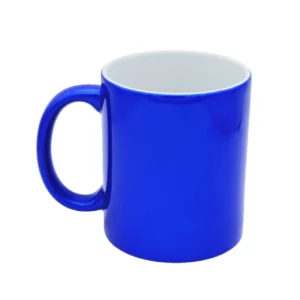
Understanding Your Mug Needs: The Foundational Inquiry
The question of where you can buy coffee mugs is not a simple one; it is, at its core, an inquiry into purpose, function, and value. Before one can intelligently navigate the vast marketplace of ceramic, glass, and metal vessels, one must first engage in a form of self-examination regarding the intended use of the mug. A failure to clarify this initial purpose can lead to inefficient spending, disappointing results, and a fundamental mismatch between the product acquired and the need it was meant to fulfill. The path to a successful purchase begins not in a store or on a website, but with a clear-headed assessment of one’s own objectives.
Defining Purpose: A Personal Keepsake or a Commercial Product?
The character of your search changes dramatically depending on whether you seek a single, cherished object for personal use or a large quantity of consistent units for a commercial endeavor. A person looking for a mug to brighten their morning coffee ritual might prioritize a unique design, a comfortable handle, or a specific aesthetic that resonates with their personal taste. For them, the cost is secondary to the emotional connection with the object. The journey might lead them to a local artisan’s market or a high-end department store, and the discovery of that one perfect mug is the end of the quest.
Contrast this with the needs of a business. A marketing manager planning a promotional giveaway, a coffee shop owner stocking their shelves, or a craft entrepreneur building an online store for personalized gifts faces an entirely different set of calculations. Here, the individual emotional connection is replaced by considerations of brand identity, scalability, consistency, and profit margin. The question is no longer “Do I love this mug?” but rather “Does this mug effectively represent my brand? Can I acquire 500 of them that are identical in quality and color? Is the unit price low enough to support my business model?” This distinction is the first and most vital fork in the road when deciding where you can buy coffee mugs.
Material Matters: Ceramic, Glass, Metal, and Beyond
Once the purpose is defined, the focus shifts to the physical nature of the mug itself. The material from which a mug is crafted dictates its properties, its suitability for different applications, and its perceived value.
Ceramic is perhaps the most traditional and popular choice, and for good reason. It possesses excellent heat retention properties, keeping beverages warm for longer periods. Its weight provides a satisfying sense of substance, and its surface, when properly prepared, is an ideal canvas for decoration. For the sublimation industry, ceramic is the gold standard.
Glass mugs offer a different sensibility. They are sleek, modern, and allow the color and texture of the beverage to become part of the aesthetic experience. They are particularly popular for layered drinks like lattes or certain herbal teas. While they can be used for sublimation, the process is often more complex, requiring specific coatings or films to ensure the ink adheres properly, as the smooth, non-porous surface of glass is not naturally receptive to the dye.
Metal mugs, typically made from stainless steel or enamel-coated steel, prioritize durability and function. Stainless steel travel mugs are indispensable for commuters, offering superior insulation and resilience against drops and impacts. Enamel mugs evoke a sense of rustic, vintage charm and are lightweight and nearly unbreakable, making them perfect for camping or outdoor use. Each material serves a different master, and choosing the right one is a critical step.
The Significance of the Sublimation Coating
For anyone involved in the world of custom printing, the concept of a sublimation coating is paramount. One cannot simply take any ceramic mug off a shelf and expect to produce a vibrant, permanent image on it. The magic of dye-sublimation printing relies on a special polymer coating applied to the mug’s surface.
Let’s imagine the surface of a regular, uncoated ceramic mug as a solid, non-porous wall. If you try to apply sublimation ink (which turns into a gas under heat) to this wall, the gas will simply hit the surface and dissipate without bonding. The image will be faint, blurry, and will wash away easily.
Now, picture a sublimation-ready mug. Its surface has been treated with a special polyester coating. Think of this coating as a layer of microscopic, heat-activated sponges. When you apply heat and pressure in a mug press, the sublimation ink on your transfer paper turns into a gas. This gas permeates the now-receptive polymer coating, and as the mug cools, the ink solidifies and becomes permanently trapped within the coating itself. The image is not sitting on the surface; it is infused into it. This is why sublimation prints are so durable, dishwasher-safe, and resistant to scratching and fading. The essential difference, therefore, lies in this invisible but indispensable polymer layer, which transforms an ordinary mug into a canvas for permanent art topsub.cn. Understanding this distinction is absolutely fundamental for anyone looking to buy coffee mugs for personalization.
| Sourcing Method | Best For | Typical Price Per Unit | Quality Control | Customization Level |
|---|---|---|---|---|
| Retail Stores | Immediate need, single purchases | High | Variable by brand | None |
| Online Marketplaces | Wide selection, hobbyists | Medium to High | Inconsistent, seller-dependent | Low to None |
| Wholesale Suppliers | Small to medium businesses | Medium | Generally consistent | Limited to stock |
| Direct from Manufacturer | Medium to large businesses | Low | High, direct oversight | Very High (OEM/ODM) |
Navigating the Retail Landscape: Convenience at a Cost
For the average consumer, the most immediate and obvious answer to the question “where can you buy coffee mugs?” is a retail store. These establishments, from massive hypermarkets to quaint local shops, offer the tangible satisfaction of seeing and holding a product before purchase. This convenience, however, comes with a series of trade-offs that become increasingly problematic as one moves from personal use to commercial application.
Big-Box Retailers: The Appeal of Immediacy
Stores like Walmart, Target, or IKEA are temples of convenience. You can walk in with a need and walk out with a solution in a matter of minutes. Their shelves are stocked with a variety of basic, mass-produced mugs at accessible price points. This is an excellent solution if a mug breaks at home and you need a replacement for your morning routine tomorrow.
However, for a business or a serious crafter, this path is a dead end. The selection, while seemingly broad to a casual shopper, is actually quite limited in terms of consistent, plain “blank” mugs suitable for customization. The stock is unpredictable; the style you buy today may be gone tomorrow, replaced by a new seasonal design. Most critically, these mugs are almost never coated for sublimation. They are finished products, not raw materials for another creative process.
Department Stores and Home Goods Specialists
Moving up the market, one finds department stores like Macy’s or specialized home goods retailers. Here, the quality and design of the mugs are generally higher. You will find products from established brands, often featuring intricate patterns or artistic designs. These are mugs sold as finished decorative objects.
The problem for a business is twofold. First, the price is significantly higher. The cost reflects the brand name, the designer’s work, and multiple layers of retail markup. Buying these mugs in any quantity for resale or promotional use is economically unfeasible. Second, like the big-box retailers, these mugs are not intended for further customization. You are paying a premium for a design you intend to cover or for a product that is technologically incompatible with your printing method.
The Hidden Costs of Retail Sourcing for Businesses
A business that attempts to source its mugs from retail channels is engaging in a fundamentally flawed strategy. The price paid per unit is the highest it can be, having passed through the hands of the manufacturer, an importer, a distributor, and finally the retailer, with each adding their own margin. There are no bulk discounts to reward larger purchases.
Beyond the direct financial cost, there is the cost of inconsistency. A marketing campaign requiring 500 identical mugs for a trade show cannot be fulfilled by visiting ten different Target stores and hoping for the best. The color of the white ceramic might vary slightly from batch to batch, the shape might have minor differences, and the overall quality is not guaranteed to be uniform. Sourcing from retail is an exercise in inefficiency and risk, a strategy that is simply not scalable for any serious commercial purpose.
Exploring Online Marketplaces: A World of Options
The digital age has transformed commerce, and online marketplaces like Amazon, Etsy, and eBay represent a vast, global repository of goods. For someone pondering where to buy coffee mugs, these platforms seem to offer a limitless universe of choices, from every conceivable shape and style to a wide range of prices. This abundance, however, is a double-edged sword, presenting both opportunity and peril for the discerning buyer.
Giants like Amazon and Etsy: A Double-Edged Sword
The primary appeal of these marketplaces is the sheer volume of options. A simple search for “white ceramic mug” can yield thousands of results from sellers all over the world. For hobbyists or individuals looking for a small number of mugs, this can be a fantastic resource. User reviews and seller ratings provide a layer of social proof, helping to guide purchasing decisions and mitigate risk. Etsy, in particular, offers a platform for smaller, independent sellers who may offer unique or pre-customized mugs that are not available through traditional retail.
The peril lies in the lack of curation and the variability of quality. These platforms are populated by a mix of manufacturers, large distributors, small-time resellers, and hobbyists. It can be incredibly difficult to discern the true origin and quality of a product. A listing for a “sublimation mug” might be from a reputable supplier who understands the technical requirements, or it could be from a reseller who is simply repeating keywords without understanding their meaning, selling an uncoated mug that will fail to print correctly. The burden of due diligence falls entirely on the buyer.
Vetting Sellers and Products in a Crowded Market
To navigate these crowded waters successfully, a buyer must become a detective. This involves more than just looking at the star rating. One must read through the negative reviews to identify recurring problems. Do buyers frequently complain that the mugs arrived broken? Do they mention that the “sublimation” mugs did not accept the ink?
It is also wise to scrutinize the seller’s profile. How long have they been on the platform? Do they specialize in craft supplies, or do they sell a random assortment of unrelated products? A specialized seller is more likely to have genuine product knowledge. When in doubt, it is always best to contact the seller directly with specific questions: “Is this mug coated with a polyester polymer for dye-sublimation? What are the recommended time and temperature settings for this specific mug in a press?” The quality of their answer is often a reliable indicator of the quality of their product. Even with these precautions, buying from large marketplaces for a business carries inherent risks of receiving inconsistent or incorrect products, which can halt production and damage profitability.
| Feature | Ceramic Mugs | Glass Mugs |
|---|---|---|
| Print Vibrancy | Excellent; opaque white background makes colors pop. | Good; can have a translucent, “stained-glass” effect. |
| Durability | High; resistant to chipping and breaking from everyday use. | Lower; more susceptible to thermal shock and impact breakage. |
| Heat Retention | Very Good; thick walls hold heat effectively. | Fair; generally loses heat faster than ceramic. |
| Aesthetic | Classic, versatile, wide range of shapes and styles. | Modern, sleek, elegant. |
| Sublimation Process | Standard; widely available with high-quality coatings. | Requires specialized coatings; can be less forgiving. |
| Common Use Cases | All-purpose coffee/tea, promotional products, photo gifts. | Lattes, specialty teas, corporate gifts with a modern flair. |
Wholesale Suppliers: Scaling Your Operations
For a business that has outgrown the limitations of retail and online marketplaces, the next logical step in the sourcing journey is the wholesale supplier. Wholesalers act as intermediaries, buying massive quantities of product directly from manufacturers and then selling them in smaller—though still substantial—quantities to other businesses. This model represents a significant move toward a more professional and scalable supply chain.
What is a Wholesaler? The Role of the Middleman
Imagine the supply chain as a river flowing from the manufacturer (the source) to the end consumer. A wholesaler is like a large reservoir along this river. They build or lease massive warehouses and fill them with products from various factories. A small coffee shop or a promotional products company that needs 500 mugs, but not the 10,000-mug minimum required by the factory, can then purchase from this wholesaler.
The wholesaler adds value by providing accessibility. They break down container-sized shipments into pallet- or case-sized orders. They handle the complexities of international shipping, customs clearance, and warehousing. In exchange for this service, they add a markup to the products they sell. So, while the price is lower than retail, it is still higher than the original factory price.
Finding and Working with Wholesale Distributors
Locating wholesale suppliers for coffee mugs often requires more effort than a simple web search, although many now have a strong online presence. Industry trade shows are a traditional and highly effective method, allowing you to meet with representatives and see the products firsthand. Trade publications and online business directories are also valuable resources.
Typically, to purchase from a wholesaler, you will need to prove that you are a legitimate business. This usually involves providing a business license and a resale certificate or tax exemption form. This gatekeeping ensures that they are selling only to other businesses, not to the general public, which protects their retail clients from being undercut. The relationship is more formal than a simple online purchase, often involving credit applications and purchase orders.
The Pros and Cons of the Wholesale Model
The primary advantage of working with a wholesaler is achieving a lower per-unit cost, which is essential for any business that intends to resell the product or use it for promotion. It allows a business to scale its operations beyond what is possible with retail sourcing. The quality is also generally more consistent, as wholesalers tend to stick with reliable manufacturing partners.
The main disadvantage is that you are still dealing with a middleman. The price you pay includes the wholesaler’s profit margin, and you have no direct control over or communication with the factory that actually produced the mugs. If a quality issue arises with a batch, the resolution process can be slow and indirect, as it must go from you to the wholesaler, who then communicates with the factory. Furthermore, your customization options are limited to the specific products that the wholesaler decides to stock in their warehouse. You can’t request a unique shape or a special color; you can only choose from their catalog.
Specialty Craft and Sublimation Stores: For the Dedicated Artisan
Within the broader world of e-commerce, a specific niche exists to serve the needs of crafters, artists, and small-scale personalization businesses. These specialty online stores focus exclusively on providing the raw materials for creative projects, including a curated selection of sublimation-ready products. For those just beginning their journey in custom mug printing, these retailers can be an invaluable resource.
The Niche Appeal of Specialized Retailers
Stores like Heat Press Nation, Johnson Plastics Plus, or Condé Systems in the US market have built their businesses by understanding the specific technical needs of the personalization industry. When you purchase a “sublimation mug” from one of these outlets, you can have a high degree of confidence that it is, in fact, properly coated and suitable for the task. They have already done the work of vetting manufacturers and ensuring the products meet a certain quality standard.
These stores also often sell a wider variety of specialty blanks that might be difficult to find elsewhere in smaller quantities. This includes items like color-changing “magic” mugs, glitter mugs, mugs with colored interiors or handles, and unique shapes like latte mugs or travel tumblers. They function as a one-stop shop, also providing the necessary sublimation inks, papers, and equipment, which is incredibly convenient for a newcomer.
When to Choose a Specialty Supplier
A specialty supplier is the ideal choice for several types of buyers. First, the hobbyist who wants to make a few photo mugs as gifts for family and friends. For them, the slightly higher price is a worthwhile trade for the guarantee of a functional product and the convenience of buying just a few units at a time.
Second, the new entrepreneur who is just starting their custom mug business. Before committing to a large inventory purchase, they can use these suppliers to buy a variety of mug styles in small quantities to test the market and perfect their production process. The support and educational resources often provided by these specialty stores can also be immensely helpful in overcoming the initial learning curve of sublimation printing. The trade-off, as always, is price. The convenience and curation come at a premium, and as a business grows, the per-unit cost from these retailers will eventually become a barrier to profitability and competitive pricing.
The Unconventional Path: Thrift Stores and Secondhand Markets
In the comprehensive search for where you can buy coffee mugs, one unconventional avenue deserves mention: the world of thrift stores, flea markets, and secondhand shops. This path is less a sourcing strategy and more of a treasure hunt, appealing to a very different set of motivations and goals.
The Treasure Hunt Mentality
For the individual collector, the artist, or someone simply seeking a truly unique object with a history, thrift stores can be a paradise. Prowling the aisles of a Goodwill or a local charity shop can unearth mugs from different eras, with forgotten company logos, quirky illustrations, or beautiful, time-worn patinas. Each find is a one-of-a-kind discovery.
This approach celebrates uniqueness and serendipity. It’s the thrill of finding a 1970s stoneware mug with a perfect heft and glaze for just a dollar. For artists who use mugs as a canvas for hand-painting or other surface decoration techniques (not sublimation), this can be a source of inexpensive and character-rich raw materials.
Why This Isn’t a Viable Business Model
It is crucial to understand the severe limitations of this approach for any kind of scalable business. The supply is, by its very nature, completely unpredictable and inconsistent. You can never build a product line around a thrift store find because you will likely never find another one exactly like it.
More importantly, for anyone in the sublimation business, these mugs are useless. They lack the required polymer coating, so any attempt to sublimate them will result in failure. There can also be concerns about the safety and condition of secondhand items; invisible cracks or leaching from old glazes could pose risks. While a fun and eco-friendly way to find a mug for personal use, the secondhand market is not a serious answer to the question of where to buy coffee mugs for any commercial purpose.
The Manufacturer Direct Approach: The Pinnacle of Sourcing
After exploring the various tiers of the marketplace—from the convenience of retail to the curated offerings of specialty stores and the bulk access of wholesalers—we arrive at the source of the river: the manufacturer. For any business that is serious about growth, quality, and profitability, establishing a direct relationship with the factory that produces the mugs is the ultimate strategic goal. This approach transcends simple purchasing and becomes a partnership.
Cutting Out the Middleman: The Economic Imperative
The most immediate and compelling reason to buy directly from a manufacturer is the economic advantage. Every intermediary in a supply chain—importer, distributor, wholesaler, retailer—must add a margin to the product to cover their own operational costs and generate a profit. By establishing a direct link to the factory, a business effectively bypasses all these intermediate markups. The per-unit cost of the mug is reduced to its absolute minimum, which has a profound impact on the bottom line.
This cost saving can be leveraged in several ways. It allows for more competitive pricing in the market, which can attract more customers. Alternatively, it can lead to higher profit margins on each sale, providing more capital for reinvestment in marketing, new equipment, or product development. From a purely financial perspective, the logic of direct sourcing is irrefutable.
The Unmatched Advantage of Quality Control
Beyond price, the direct-from-factory model offers an unparalleled level of control over product quality. When you work with a wholesaler or buy from a marketplace, you are a step removed from the production process. If you receive a batch of mugs with flaws—pinholes in the glaze, inconsistent coating, or variations in color—your recourse is limited and often slow.
By contrast, a direct partnership with an integrated factory and trade company allows for a collaborative approach to quality assurance. An experienced manufacturer will have a robust quality control process that monitors every stage of production. This includes vetting the raw materials (the clay and glaze chemicals), maintaining the precision of the equipment (the kilns and coating sprayers), training the personnel who operate the machinery and inspect the finished goods, and controlling the workshop environment to prevent contamination from dust or humidity. You can establish clear, specific quality standards, and the factory is directly accountable to you for meeting them. This direct feedback loop is the most effective way to ensure that every single mug you receive meets your exact specifications.
Unleashing True Customization: OEM and ODM Services
Perhaps the most powerful advantage of the direct model is the potential for true customization. Wholesalers and retailers can only offer you the products they have in stock. A manufacturer can create products specifically for you. This is typically done through two types of services: OEM and ODM.
- OEM (Original Equipment Manufacturer): This is the most common form of customization. In an OEM arrangement, you select a base product from the factory’s existing catalog—for example, a standard 11 oz. ceramic mug—and the factory produces it with your specific branding, such as a logo printed on the bottom or packaged in a custom-designed box.
- ODM (Original Design Manufacturer): This is a more collaborative and powerful form of customization. In an ODM arrangement, you may have an idea for a completely new mug design—a unique shape, a specific handle, a novel size, or a special type of ceramic. You work with the manufacturer’s design and engineering team to develop this concept from a drawing into a prototype and finally into a mass-produced product that is exclusively yours.
These services allow a business to differentiate itself in a crowded market. Instead of selling the same standard mug as everyone else, you can offer a product that is truly unique to your brand, creating a powerful competitive advantage.
A Case Study in Sourcing: From Local Supplier to Global Partner
Consider the journey of “Elena,” a fictional entrepreneur in Europe who starts a business selling mugs with motivational quotes, a product with deep personal meaning and encouragement. Initially, she buys her blank mugs in small cases from a local craft supplier. The mugs are reliable but expensive, limiting her profit margins. As her sales grow, she finds a national wholesale distributor. Her per-unit cost drops by 30%, and she can order by the pallet. Her business thrives, but she notices that several competitors are using the exact same mug blanks. Her brand lacks a unique physical identity.
Seeking to elevate her business, Elena researches how to source directly from a manufacturer. She identifies a factory with a decade of experience and a dedicated international trade department. After initial discussions and sample reviews, she places her first container order. Her unit cost drops another 40% from the wholesale price. More importantly, she works with the factory on an OEM basis to have her company logo subtly embossed on the bottom of each mug. A year later, she engages their ODM services to develop a new mug shape with a more ergonomic handle that becomes her signature product. By moving up the supply chain, Elena transformed her business from a simple reseller into a unique brand with a defensible market position and significantly higher profitability.
Why an Experienced Factory Matters
The success of the direct-sourcing model is heavily dependent on the capability of the manufacturing partner. A factory with extensive experience, particularly in the specific niche of sublimation consumables, brings a wealth of knowledge to the table. An established producer of ceramic sublimation cups understands the nuanced chemistry of the coatings and the precise firing temperatures required to create a perfect, durable canvas for printing.
An experienced factory will have refined its production processes over many years, invested in high-quality equipment like automated spraying lines, and implemented rigorous quality control at every step. This expertise ensures that product quality not only meets but often exceeds international standards. This reliability is the foundation upon which a successful, long-term business partnership is built.
Navigating International Sourcing
For businesses in the US, Europe, or Russia, the prospect of sourcing directly from a factory in China can seem daunting, with concerns about communication, logistics, and payment security. This is why it is vital to partner with a manufacturer that has not only production expertise but also a sophisticated and experienced international trade operation.
A company that has established a dedicated trade entity, like Zibo Tuopus International Trade Co., Ltd., is structured to make this process seamless. They have multilingual staff who can communicate clearly about technical specifications and order details. They have expertise in managing international shipping, handling customs documentation, and ensuring that products arrive safely and on time. They bridge the gap between the workshop floor and the international client, removing the friction and uncertainty from the process and making the immense benefits of direct sourcing accessible to businesses worldwide. By carefully selecting such a partner, the question of where you can buy coffee mugs evolves into a strategic decision to build a global supply chain.
FAQ
What is the main difference between a regular ceramic mug and a sublimation mug? A sublimation mug has a special polymer coating applied to its surface. This coating is designed to absorb sublimation ink when it is turned into a gas by heat, resulting in a permanent, full-color image infused into the mug. A regular ceramic mug lacks this coating, and any image applied via sublimation will be faint, blurry, and not permanent.
Can I use any coffee mug I buy in a store for sublimation printing? No. Unless the mug is explicitly sold as a “sublimation blank,” it will not work for this printing process. Standard mugs from retail stores are not coated and will not accept the sublimation dye correctly.
Are sublimation mugs safe to drink from and use in the microwave or dishwasher? Yes, when produced correctly by a reputable manufacturer, sublimation mugs are perfectly safe. The image is infused into the coating, not sitting on the surface. High-quality sublimation mugs are generally microwave and dishwasher safe, though hand-washing is often recommended to preserve the image’s vibrancy for the longest possible time. It is best to avoid extreme temperatures, such as boiling liquids or freezing.
How do I find a reliable direct-from-factory supplier for coffee mugs? Look for manufacturers with a long history in the industry, specifically in producing sublimation consumables. A reliable supplier, such as TopSub, will have an established quality control process, offer OEM/ODM services, and possess an experienced international trade department to facilitate smooth communication and logistics. Online B2B platforms like Alibaba can be a starting point, but direct outreach and thorough vetting are essential.
What are OEM and ODM services for mugs? OEM (Original Equipment Manufacturer) is when a factory produces its standard mug design but with your custom branding, like a logo on the bottom or custom packaging. ODM (Original Design Manufacturer) is a more in-depth partnership where the factory helps you design and manufacture a completely new and unique mug shape or style that is exclusive to your brand.
Is it always cheaper to buy coffee mugs in bulk? Generally, yes. The per-unit price of a mug decreases as the order quantity increases. This principle, known as economy of scale, applies whether you are buying from a wholesaler or directly from a manufacturer, but the most significant cost savings are achieved by purchasing large quantities directly from the factory.
What should I look for in a quality sublimation mug? A high-quality sublimation mug should have a bright, pure white surface for vibrant color reproduction. The polymer coating should be smooth and evenly applied, with no visible drips, bubbles, or pinholes. The ceramic itself should be free of blemishes, and the shape should be consistent across all units in a batch.
Can I buy just one or two mugs directly from a manufacturer? Typically, no. Manufacturers are set up for mass production and have high minimum order quantities (MOQs), often in the hundreds or thousands of units. For purchasing just a few mugs, you would need to go through a retail channel or a specialty craft supplier.
Conclusion
The journey to determine where you can buy coffee mugs is ultimately an exploration of one’s own specific needs and ambitions. There is no single correct answer, but rather a spectrum of solutions suited to different purposes. For the casual consumer seeking a single vessel for their daily beverage, the convenience of retail or the charm of a secondhand find is perfectly adequate. For the burgeoning artisan testing the waters of personalization, specialty craft suppliers offer a reliable and accessible entry point.
However, as ambition scales into enterprise, the logic of the supply chain becomes undeniable. For any business built upon the foundation of these ceramic canvases—be it for promotional branding, corporate gifting, or a thriving e-commerce store—the path of intermediaries is fraught with compromises on cost, quality control, and creative freedom. The most rational and strategically sound approach leads directly to the source. Partnering with an experienced manufacturer unlocks profound advantages, transforming a simple procurement task into a cornerstone of business strategy. It provides access to the lowest possible cost, direct oversight of quality, and the boundless potential of customization. This direct relationship is not merely about buying mugs; it is about building a resilient, profitable, and unique brand from the ground up.
References
Mecolour. (2023, September 19). How to choose the best coffee mugs for sublimation?
Mecolour. (2023, December 19). Sublimation ceramic vs. glass mugs: How to choose?
Mecolour. (2024, April 9). Are sublimation mugs blanks safe to drink from?
MT Ceramic. (2024, November 19). Top ceramic mug styles & designs trending in 2025.
TopSub. (2025, July 23). What are the differences between coated and uncoated ceramic mugs?topsub.cn