

 Swedish
  English
  Spanish
  Russian
  German
  Arabic
  Italian
  Portuguese
  French
  Greek
Greek  Polish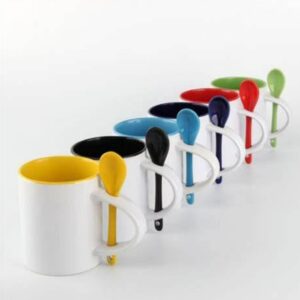
Abstract
An inquiry into the cost of mugs reveals a complex interplay of material science, manufacturing logistics, and global economics. This analysis examines the primary factors that determine the price of various mug types, including ceramic, glass, metal, and specialized sublimation-coated vessels. The investigation deconstructs the cost structure, beginning with the selection and sourcing of raw materials, which establishes the foundational expense. It then proceeds through the stages of production, from molding and firing to the application of coatings and glazes, highlighting how energy consumption and labor contribute significantly to the final price. Furthermore, the article explores the economics of customization, comparing the cost-effectiveness of different printing technologies like dye-sublimation, screen printing, and engraving. The influence of order volume, distinguishing between retail and wholesale pricing, is also evaluated. Finally, the total landed cost is considered, incorporating international shipping, tariffs, and quality control measures, providing a holistic understanding of how much mugs cost for businesses and consumers in 2025.
Key Takeaways
- Material choice, from basic ceramic to stainless steel, is the primary driver of a mug’s base cost.
- Manufacturing complexity, including firing temperatures and coating processes, adds significant expense.
- Customization methods like sublimation offer full-color detail but have different cost structures than screen printing.
- Purchasing in wholesale volumes drastically reduces the per-unit price, a key factor for businesses.
- Understanding how much do mugs cost requires factoring in shipping, tariffs, and quality control for a true total.
- Working directly with a manufacturer can offer significant cost savings and greater control over the final product.
- Quality assurance is not a cost but an investment, preventing future losses from defective products.
Table of Contents
- The Foundational Economics of a Mug: More Than Just Clay and Glaze
- A Comparative Cost Analysis of Key Mug Types
- The Customization Premium: How Much Do Mugs Cost When Personalized?
- The Scale of Purchase: Wholesale vs. Retail Pricing Structures
- Navigating Global Supply Chains: Logistics, Tariffs, and Landed Costs
- Quality Control and Its Impact on Price: The Cost of Consistency
- Frequently Asked Questions (FAQ)
- Conclusion
- References
The Foundational Economics of a Mug: More Than Just Clay and Glaze
When you hold a simple ceramic mug, its weight and warmth feel straightforward, almost elemental. Yet, the journey it took to reach your hands is a story of geology, chemistry, and economics. To truly grasp how much mugs cost, we must first deconstruct the object itself and understand the value embedded at each stage of its creation. It is a process that begins deep in the earth and ends with a complex calculation of global logistics. As a manufacturer with a decade of experience, we have seen every variable that can shape the final price, and it all starts with the very substance of the mug.
Raw Material Selection: The Starting Point of Cost
The identity of a mug begins with its material. This choice is the single most significant determinant of its base cost. Think of it as the foundation of a house; the materials chosen for the foundation will dictate much of the structure’s character, durability, and expense.
For the classic ceramic mug, the primary ingredient is clay. But not all clay is the same. Earthenware clays are common and fire at lower temperatures, making them less expensive but also more porous and less durable. Stoneware clays, which are what we primarily use for quality sublimation mugs, require higher firing temperatures. This process, known as vitrification, causes the clay particles to fuse, resulting in a dense, non-porous, and far more durable body. The cost of stoneware clay is higher, and the energy required to fire it is greater, which is directly reflected in the price. Porcelain, a type of kaolin clay, represents the highest tier of ceramics. It is prized for its whiteness, translucence, and strength, but it is also the most expensive to source and the most demanding to work with.
For metal mugs, the equation changes. A stainless steel mug’s cost is tied to the global commodities market for nickel and chromium. We typically use 304 food-grade stainless steel, which offers excellent corrosion resistance. Its price fluctuates with market supply and demand. Aluminum is lighter and often cheaper, but it may not offer the same longevity or perceived value. Enamel mugs are a fascinating hybrid: a steel core coated in a layer of powdered glass (frit) that is fused to the surface. The cost here involves both the steel and the specialized enamel coating process.
Each material tells a different economic story. A decision to use stoneware over earthenware is a decision to prioritize durability over initial cost savings—a choice that has profound implications for the product’s lifespan and the consumer’s satisfaction.
The Manufacturing Process: From Shaping to Firing
Once the raw materials are chosen, the manufacturing journey begins. Each step is a point of labor, energy, and potential cost addition. Let’s walk through the creation of a ceramic mug.
First, the clay is mixed into a liquid form called slip. This slip is poured into molds, a process known as slipcasting. The molds themselves are a capital expense, and their lifespan is finite. After a set time, the excess slip is poured out, leaving a thin layer of clay adhering to the inside of themold. This “greenware” is fragile and must be handled with care. The seams from the mold are smoothed by hand—a step where skilled labor is indispensable. A handle is then attached using more slip.
Next comes the firing. The first firing, or bisque firing, transforms the fragile greenware into a hard, porous ceramic. This process takes hours and consumes a tremendous amount of energy. After bisque firing, the glaze is applied. For a standard mug, this might be a simple white glaze. For one of our ceramic sublimation mugs, a highly specialized polymer coating must be applied with absolute uniformity. This coating is the magic layer that allows a sublimated image to be transferred. The technology and precision required for this coating process represent a significant investment and a key cost component. Our three thermal sublimation spraying lines are the heart of this operation.
The final step is the glost firing, a higher-temperature firing that melts the glaze or cures the sublimation coating, creating the smooth, glossy surface you recognize. Any error in this process—a slight deviation in temperature, an impurity in the glaze—can result in a defective product that must be discarded, and the cost of that loss is absorbed into the overall production expense.
Labor and Energy: The Hidden Costs in Every Unit
In any discussion of how much mugs cost, the human element and the energy to power our machines are often overlooked. Our factory employs 120 people. These are not just workers; they are skilled artisans and technicians who oversee every step, from mixing the clay to inspecting the final product. Their expertise is what ensures consistency. The cost of this skilled labor, particularly in processes that cannot be fully automated like quality inspection and hand-finishing, is a core part of each mug’s price.
Energy costs are equally significant. The kilns used for firing ceramics are massive consumers of electricity or natural gas. Running these kilns at temperatures exceeding 1200°C (2200°F) for hours on end is one of the largest operational expenses in a ceramics factory. The price of energy varies regionally and globally, and any spike in energy prices has a direct impact on the cost of producing every single mug. When a client asks why prices have shifted, fluctuations in global energy markets are often a contributing factor. Understanding this helps contextualize the price not as an arbitrary number but as a reflection of real-world resources.
A Comparative Cost Analysis of Key Mug Types
To make an informed purchasing decision, it is helpful to see a direct comparison of the most common mug types available. The choice you make will depend on your intended use, your budget, and the aesthetic you wish to achieve. Below, we break down the characteristics and typical cost structures of five popular mug categories. This side-by-side analysis should illuminate the trade-offs involved with each option.
| Mug Type | Primary Material | Typical Wholesale Blank Price (per unit) | Key Characteristics | Best For |
|---|---|---|---|---|
| Standard Ceramic | Earthenware/Stoneware | $1.00 – $2.50 | Classic feel, highly versatile, good for basic printing | Everyday use, promotional giveaways, coffee shops |
| Glass | Soda-lime/Borosilicate Glass | $1.50 – $4.00 | Elegant, transparent, can be etched or sublimated | Upscale cafes, corporate gifts, showcasing beverages |
| Stainless Steel | 304 Food-Grade Steel | $3.00 – $7.00 | Highly durable, excellent insulation (if double-walled) | Travel, outdoor activities, premium branding |
| Enamel | Steel core, enamel coating | $2.50 – $5.00 | Lightweight, shatter-resistant, rustic/vintage appeal | Camping, outdoor brands, retro-themed promotions |
| Sublimation-Ready | Stoneware with polymer coating | $1.50 – $3.50 | Designed for vibrant, full-color photo printing | Personalized gifts, photo merchandise, complex logos |
Type 1: The Classic Ceramic Mug
The ceramic mug is the archetype. It is the most common mug for a reason: it strikes a balance between cost, performance, and aesthetic appeal. The cost of a basic white ceramic mug is relatively low due to mature manufacturing processes and abundant raw materials. However, as discussed, the price can vary based on the quality of the clay (stoneware vs. earthenware) and the thickness of the mug walls. A thicker, heavier stoneware mug will cost more but will also retain heat better and resist chipping. When people ask “how much do mugs cost,” this is usually their mental starting point. They are excellent canvases for simple logos via screen printing, but for more complex imagery, their uncoated surface is not suitable for sublimation.
Type 2: The Elegant Glass Mug
Glass mugs offer a different sensory experience. They are visually appealing, allowing the color of the coffee, tea, or beer to become part of the aesthetic. Their cost is slightly higher than ceramic mugs due to the energy-intensive process of melting and molding glass. Borosilicate glass, known for its thermal shock resistance (used in brands like Pyrex), is a more premium and expensive option compared to standard soda-lime glass. Glass mugs are fantastic for laser etching, which creates a frosted effect, and some are available with a special coating for sublimation, though this is less common than with ceramics. Their primary drawback is fragility, which can lead to higher rates of breakage during shipping and use.
Type 3: The Durable Stainless Steel Mug
For longevity and performance, nothing beats stainless steel. These mugs are virtually indestructible, making them ideal for travel, camping, and demanding environments. The main cost driver is the price of stainless steel itself. A more significant factor is the construction. A single-walled steel mug is relatively simple and less expensive. However, the most popular models are double-walled and vacuum-insulated. This construction, which creates a vacuum between two layers of steel, is what gives the mug its exceptional ability to keep drinks hot or cold for hours. The manufacturing process for a vacuum-insulated mug is far more complex, involving precise welding and the creation of a vacuum seal, which accounts for its higher price point.
Type 4: The Vintage Enamel Mug
Enamel mugs evoke a sense of nostalgia and rustic charm. They consist of a steel base that has been dipped in enamel and fired. This makes them much lighter than ceramic mugs and shatterproof, though a hard impact can cause the enamel to chip (which some feel adds to their character). Their cost is moderate, sitting between a standard ceramic and a stainless steel mug. The process of applying the enamel coating correctly, without drips or bubbles, requires skill. They are popular with outdoor brands, national parks, and anyone aiming for a retro or campsite aesthetic.
Type 5: The Specialized Sublimation Mug
This is our area of expertise. A sublimation mug looks almost identical to a standard ceramic mug, but it holds a secret: a microscopic layer of polymer coating. This coating is engineered to accept sublimation inks. When heated in a mug press, the solid ink turns into a gas and permeates the polymer coating, becoming a permanent part of the mug’s surface. The result is a vibrant, full-color, photographic-quality image that will not peel, crack, or fade.
The cost of a blank sublimation mug is slightly higher than a standard ceramic mug of the same quality. This price difference is entirely due to the cost of the sublimation coating and the precision required to apply it. The quality of this coating is everything. An uneven or poorly formulated coating will result in blotchy, faded transfers. We have spent years perfecting our coating formula and application process to ensure maximum vibrancy and consistency. This is why sourcing from a reliable Sublimation cup manufacturer is so vital for businesses that rely on sublimation. The small premium paid for a high-quality blank is an investment in a flawless final product.
| Customization Method | Relative Cost per Unit | Setup Cost | Best Volume | Design Complexity | Hållbarhet |
|---|---|---|---|---|---|
| Dye-Sublimation | Low to Moderate | Very Low | Low to High | Unlimited colors, photos | Excellent (Permanent) |
| Screen Printing | Very Low (at volume) | Moderate | Medium to High | Limited colors (1-4) | Good (Can wear over time) |
| Pad Printing | Low | Low to Moderate | Medium to High | Limited colors, small areas | Good |
| UV Printing | Moderate to High | Low | Low to Medium | Full color, can be textured | Moderate (Surface layer) |
| Laser Engraving | High | Very Low | Low to High | No color, monochrome | Excellent (Permanent) |
The Customization Premium: How Much Do Mugs Cost When Personalized?
A blank mug is a canvas. Its true value, especially in the promotional products and personalized gift markets, is unlocked through customization. The method used to apply a design is a major factor in the final cost. The question shifts from “how much do mugs cost” to “how much does it cost to put my design on a mug?” Each technique has its own economic profile, suited for different types of designs, order volumes, and budgets.
Sublimation Printing: A Deep Dive into Cost-Effectiveness
Sublimation printing is revolutionary because it divorces cost from complexity. With most other methods, each additional color adds another layer of cost. With sublimation, printing a simple one-color logo costs exactly the same as printing a full-wrap, high-resolution photograph.
Here is how it works: The design is printed onto special transfer paper using sublimation inks. This paper is then wrapped around a sublimation-ready mug and placed into a heat press. At approximately 200°C (400°F), the inks turn to gas and the pores of the mug’s polymer coating open up. The gas permeates the coating, and as the mug cools, the pores close, trapping the ink permanently within the surface.
The beauty of this is the low setup cost. There are no screens to create or plates to engrave. This makes sublimation incredibly cost-effective for small runs and even one-off personalized mugs. For a business selling on a platform like Etsy, this is ideal. For a corporation needing 500 mugs with a complex, multi-colored logo, sublimation is often cheaper and produces a better result than traditional screen printing. The main costs are the specialized ink, the transfer paper, and the energy for the heat press. The per-unit cost remains relatively flat regardless of quantity, which is different from other methods.
Screen Printing vs. Pad Printing: For Simpler Designs
Screen printing is a classic method for decorating mugs. It involves creating a stencil (a “screen”) for each color in the design. Ink is then pushed through the screen onto the mug’s surface. A new screen is required for each color, which means setup costs can be high. If your design has four colors, you need four screens and four separate applications. This makes screen printing uneconomical for small orders or designs with many colors.
However, once the setup is complete, the per-unit cost of applying the ink is very low. This is why screen printing excels at high-volume orders of simple, one or two-color logos. For an order of 5,000 mugs with a single-color logo, screen printing is almost always the cheapest option. The print itself is a layer of ink that sits on top of the mug’s surface, so while durable, it can be susceptible to wear and tear from dishwashing over many years.
Pad printing is a similar concept but uses a silicone pad to transfer the ink from an etched plate to the mug. It is excellent for printing on curved or irregular surfaces, but it is typically limited to smaller print areas and simple designs.
Engraving and Etching: Permanent and Premium Options
Laser engraving is a premium customization method that uses a high-powered laser to physically etch a design into the mug’s surface. On a ceramic or glass mug, it removes the outer layer to reveal the material underneath. On a powder-coated stainless steel mug, it removes the coating to reveal the shiny steel below.
Because this is a digital process with no inks or screens, there are virtually no setup costs, similar to sublimation. The primary cost is the machine time. Engraving a complex design takes longer than a simple one, so the price is often related to the design’s intricacy. The result is a permanent, high-end look that cannot be peeled or washed away. It is a monochrome process, so it is not suitable for colored logos. Engraving is often the most expensive per-unit customization method, but it imparts a sense of quality and permanence that no other method can match.
The Role of Design Complexity and Color Count
As you can see, the relationship between design complexity and cost varies dramatically by method.
- For sublimation and engraving, complexity has a minimal impact on price. Cost is driven by the single action of printing or engraving, not the content of the design.
- For screen printing, complexity is the primary cost driver. Each additional color can add a significant amount to the setup fee and a smaller amount to the per-unit price.
When you are getting a quote for custom mugs, this is a vital consideration. If you have a complex, full-color design, you should immediately look toward sublimation. If you have a simple, one-color logo and need thousands of units, screen printing will likely be your most economical path. A manufacturer providing OEM and ODM services should be able to guide you toward the most cost-effective method for your specific project.
The Scale of Purchase: Wholesale vs. Retail Pricing Structures
The price of a single mug on a store shelf bears little resemblance to the price a business pays when ordering hundreds or thousands of units directly from a factory. The question “how much do mugs cost” has two very different answers depending on who is asking: the end consumer or the business buyer. Understanding the principles of wholesale pricing is fundamental for any business that uses mugs as a product or promotional tool.
Understanding MOQs (Minimum Order Quantities)
When you approach a manufacturer like us, one of the first terms you will encounter is MOQ, or Minimum Order Quantity. An MOQ is the smallest number of units a factory is willing to produce in a single production run. For us, setting up a production line—calibrating the machines, mixing the correct glaze, preparing the sublimation coating—has a fixed cost regardless of whether we produce 100 mugs or 10,000 mugs. To make the production run economically viable, we need to spread that setup cost over a certain number of units. This is the origin of the MOQ.
MOQs can vary widely. For a standard white ceramic mug, the MOQ might be a few hundred units. For a custom-molded shape or a unique glaze color, the MOQ could be in the thousands, because the setup costs for creating a new mold or developing a new glaze are much higher. A low MOQ is often a sign of a more flexible production process, like the one we employ for our sublimation mugs, where the customization happens at a later stage.
The Per-Unit Price Drop: A Volume-Based Breakdown
The core principle of wholesale pricing is economies of scale. As the order quantity increases, the per-unit cost decreases. This happens for several reasons:
- Amortization of Setup Costs: As mentioned, the fixed setup costs are divided by the total number of units. Spreading a $500 setup cost over 500 mugs adds $1 to each mug. Spreading it over 5,000 mugs adds only $0.10.
- Material Purchasing Power: We buy our raw materials—clay, glaze, steel—in massive quantities. The larger the order you place with us, the larger the order we can place with our suppliers, often allowing us to secure a better price for the raw materials, a saving we can pass on to you.
- Production Efficiency: A continuous production run is more efficient than many small, stop-and-start runs. There is less waste, less machine downtime, and more streamlined labor.
This price scaling is often presented in tiers. For example:
- 500 – 999 units: $2.00 per mug
- 1,000 – 4,999 units: $1.80 per mug
- 5,000+ units: $1.65 per mug
This tiered structure provides a clear incentive for buyers to increase their order volume to achieve a lower cost per unit, which in turn increases their own profit margin.
Working Directly with a Manufacturer vs. a Distributor
For the first nine years of our existence, we supplied our sublimation cups to domestic trading companies in China. These trading companies, or distributors, would then sell the mugs to international clients. They provided a valuable service, but they also added a layer of cost. A distributor buys from us, marks up the price to cover their own operational costs and profit, and then sells to the end buyer.
In 2022, we established Zibo Tuopus International Trade Co., Ltd. to connect directly with clients worldwide. By removing the middleman, we can offer more competitive pricing. When a business works directly with an integrated factory and trade company like ours, they are accessing the source. This not only lowers the cost but also improves communication, allows for greater customization (OEM/ODM services), and provides more direct oversight of quality control.
For a small business, buying from a domestic distributor might be simpler for small quantities. For any business looking to scale, establishing a relationship with a manufacturer is the most effective way to manage costs and ensure product quality. It transforms the purchasing process from a simple transaction into a strategic partnership.
Navigating Global Supply Chains: Logistics, Tariffs, and Landed Costs
The price quoted by a factory in China is not the final price you will pay to have the mugs in your warehouse in the United States or Europe. To accurately calculate how much mugs cost, a buyer must account for the complex journey the products take across the globe. This total expense is known as the “landed cost,” and it includes shipping, insurance, customs duties, and taxes. Overlooking these costs is one of the most common and costly mistakes a new importer can make.
Shipping and Freight: From Factory to Port
The journey begins the moment the mugs are packed into cartons and loaded onto a truck at our factory. The cost of transporting them from our facility to the nearest seaport (like Qingdao) is the first logistical expense.
From there, the primary mode of transport for bulk goods is ocean freight. Costs for ocean freight are notoriously volatile, influenced by global demand, fuel prices, port congestion, and the availability of shipping containers (CMA CGM, 2022). The price is typically quoted per container (e.g., a 20-foot or 40-foot container). Your total shipping cost will depend on how much space your order occupies. A full container load (FCL) is more cost-effective per cubic meter than a less-than-container load (LCL), where you share container space with other importers.
Air freight is a much faster alternative, taking days instead of weeks, but it is also significantly more expensive. It is generally reserved for small, high-value orders or urgent restocks, as the cost can be prohibitive for a heavy, bulky product like mugs.
Import Duties, Tariffs, and Taxes: The Buyer’s Responsibility
When the shipment arrives at a port in the destination country, it must be cleared through customs. This is where duties, tariffs, and taxes are applied. These are fees levied by the government of the importing country.
- Tariffs/Duties: These are taxes on imported goods. The amount is determined by the product’s Harmonized System (HS) code. Ceramic mugs have a specific HS code, and the tariff rate can vary depending on trade agreements between China and the importing country. For example, the United States may have a different tariff rate for ceramic mugs from China than the European Union does. These rates can change due to political and economic factors, so it is vital to check the current rates before placing an order.
- Value-Added Tax (VAT) or Goods and Services Tax (GST): Many countries, particularly in Europe, apply a VAT on the total value of the imported goods (including the cost of the goods, shipping, and insurance). This is a significant cost that must be factored into the final landed price.
Navigating customs requires a customs broker—a licensed professional who ensures your shipment complies with all regulations and that the correct duties are paid. The broker’s fee is another component of the landed cost.
The Concept of “Landed Cost”: The True Final Price
The landed cost is the sum of all expenses incurred to get the product from the factory floor to your warehouse door. The formula is:
Landed Cost = Product Cost + Shipping Costs + Customs Duties/Tariffs + Insurance + Broker Fees + Domestic Transportation
Let’s imagine you order 2,000 mugs from us at $1.70 per unit (Product Cost = $3,400).
- Ocean Freight might be $1,500.
- Insurance could be $50.
- A tariff of 10% on the product cost would be $340.
- The customs broker’s fee might be $250.
- Trucking from the destination port to your warehouse could be $300.
The total landed cost would be $3,400 + $1,500 + $50 + $340 + $250 + $300 = $5,840. The per-unit landed cost is therefore $5,840 / 2,000 = $2.92.
As you can see, the logistics and import fees added $1.22 to the initial $1.70 factory price. This is why a simple factory quote is only the beginning of the story. A savvy buyer always calculates the estimated landed cost to understand the true investment and determine a profitable selling price.
Quality Control and Its Impact on Price: The Cost of Consistency
In the calculus of how much mugs cost, there is a temptation to always seek the lowest possible price. However, experience teaches a harsh lesson: a price that seems too good to be true often comes at the expense of quality. Poor quality is not just a disappointment; it is a direct financial loss. A shipment of mugs with flawed coatings, cracked handles, or inconsistent colors can be unsellable, turning a perceived bargain into a total loss. This is why our commitment to a rigorous quality control process is not a cost center, but a value generator for our clients.
Defining Quality Grades (A, B, C Grade Mugs)
In the ceramics industry, it is common to grade products based on their quality.
- A-Grade: This is the highest quality product. The mug is free of defects. The shape is uniform, the glaze is smooth and even, and for sublimation mugs, the coating is flawless, ensuring a perfect transfer. These are the mugs you want for your brand.
- B-Grade: These mugs have minor cosmetic flaws that do not affect their function. There might be a tiny pinhole in the glaze, a slight unevenness on the bottom, or a small dark spot. Some factories sell these at a discount. They might be acceptable for some internal uses but are generally not suitable for retail or high-end promotional gifts.
- C-Grade: These mugs have significant defects. They may have cracks, warped shapes, large blemishes, or faulty handles. These should be discarded and recycled at the factory.
Some factories might offer an unusually low price by mixing B-grade mugs into an A-grade shipment. A 5% defect rate might seem small, but in an order of 2,000 mugs, that is 100 unusable products. The effective cost per usable mug suddenly increases. If you paid $1.70 per mug, your true cost for the 1,900 good mugs is now $1.79, not to mention the hassle of dealing with the defective units.
The Rigorous Quality Control Process at Our Factory
We believe that quality is not something you inspect for at the end; it is something you build in at every stage. Our quality control process is comprehensive, focusing on the four key factors that influence product quality: personnel, equipment, raw materials, and the workshop environment.
- Personnel: Our employees are trained to identify potential issues at their specific station. The person attaching handles checks for a secure bond. The technician monitoring the kiln ensures temperature consistency. Our dedicated Quality Assurance (QA) team performs inspections at multiple checkpoints: after molding, after bisque firing, after glazing/coating, and a final inspection before packing.
- Equipment: Our 20+ sets of ceramic production equipment and 3 sublimation spraying lines are regularly maintained and calibrated. A misaligned sprayer can lead to uneven coatings. A faulty thermocouple in a kiln can ruin an entire batch. Proactive maintenance prevents these costly errors.
- Raw Materials: We source our clay and chemical components for our glazes and coatings from trusted suppliers with whom we have long-term relationships. Every new batch of raw material is tested to ensure it meets our specifications before it enters the production line.
- Workshop Environment: A clean, well-organized workshop minimizes the risk of contamination. Dust or debris can get into the glaze or onto the greenware, causing blemishes in the final product. We maintain a controlled environment, especially in our thermal sublimation coating processing workshop, to ensure the purity of the application.
This meticulous process ensures that the products we ship meet international standards and the expectations of our clients.
Why Paying a Little More for Quality Saves Money in the Long Run
Investing in a supplier with a proven quality control system is a form of risk management. A slightly higher per-unit price from a reputable manufacturer is an insurance policy against:
- Lost Revenue: Having to discard defective products.
- Reputational Damage: A customer receiving a flawed mug associates that poor quality with your brand.
- Logistical Headaches: The time and cost of negotiating refunds, arranging for returns, or ordering replacements.
When you evaluate quotes from different suppliers, the price is just one variable. You should also inquire about their quality control processes, their defect rates, and their policies for handling any issues that arise. A transparent and confident answer to these questions is often a better indicator of value than the lowest number on a price sheet. The most successful businesses are those that understand that consistency and reliability are worth paying for.
Frequently Asked Questions (FAQ)
What is a reasonable price for a single custom mug? For a one-off, fully customized sublimation mug sold by a retail business (like on Etsy or a gift shop), a price between $15 and $25 is typical in 2025. This price covers the cost of the high-quality blank mug, the sublimation printing process, the design work, labor, overhead, and the seller’s profit margin.
How much does a wholesale order of 1,000 ceramic mugs typically cost? For a wholesale order of 1,000 standard 11oz white ceramic sublimation-ready mugs directly from a manufacturer, you can expect a factory price (FOB) in the range of $1.50 to $2.50 per unit. The final price depends on the mug’s specific weight and quality grade. This does not include shipping, customs, or any customization.
Does the color of the mug affect the price? Yes, it often does. A standard white mug is the baseline. Mugs with a colored interior, handle, or a full-body color require additional production steps and pigments, which increases the cost. “Magic mugs” or color-changing mugs, which have a heat-sensitive outer layer, are significantly more expensive due to the specialized thermochromic coating.
Why are sublimation mugs more expensive than plain white mugs? The price difference is due to the special polymer coating required for sublimation. This coating must be formulated and applied with high precision to ensure it can absorb the sublimation ink and produce a vibrant, permanent image. The technology, materials, and quality control for this coating process add a premium to the cost of the blank mug compared to a standard, uncoated ceramic mug.
How can I reduce the cost of my custom mug order? The most effective way is to increase your order volume. The per-unit price drops significantly with larger quantities due to economies of scale. You can also simplify your design if you are using a method like screen printing (fewer colors mean lower setup costs). Finally, working directly with a manufacturer instead of a middleman or distributor will almost always result in a better price.
Are there hidden costs when importing mugs from China? Yes, for inexperienced importers, costs like customs duties, tariffs, VAT/GST, port fees, and customs brokerage fees can be unexpected. It is vital to calculate the full “landed cost”—the total cost to get the product to your warehouse—not just the factory price. A good manufacturer or freight forwarder can help you estimate these costs.
What is the difference between OEM and ODM services? OEM (Original Equipment Manufacturer) is when we produce a mug based on your specific design and specifications. You provide the blueprint. ODM (Original Design Manufacturer) is when you select a product from our existing catalog and we customize it with your logo or branding. We can also develop new designs for you based on your concepts. ODM is generally faster and has lower development costs.
How much do mugs cost if I provide the design myself? Providing your own print-ready design does not typically reduce the cost of customization itself, but it does eliminate any design fees a company might charge. The cost will still depend on the printing method (sublimation, screen printing, etc.) and the order volume. For sublimation, the design’s complexity doesn’t affect the price, so you can provide a full-color photo for the same cost as a simple logo.
Conclusion
The seemingly simple question of a mug’s cost unfolds into a narrative of material science, industrial processes, and global trade. The final price is not a single number but a culmination of choices and circumstances: the type of clay dug from the earth, the energy consumed by the kiln, the skill of the hand that attaches the handle, the chemical precision of a sublimation coating, the number of colors in a logo, the quantity of the order, and the long journey across the ocean.
To navigate this landscape successfully, a buyer must adopt a perspective that goes beyond the initial price tag. An understanding of the relationship between material and durability, between customization method and design complexity, and between order volume and per-unit cost empowers you to make strategic decisions. Recognizing that quality control is an investment, not an expense, and that landed cost is the only true measure of price, protects your business from hidden losses and ensures a better return. Ultimately, a deeper comprehension of how these elements converge allows you to find not just the cheapest mug, but the one that delivers the greatest value for your specific purpose.
References
CMA CGM. (2022). Container shipping: The secret to its success. CMA CGM Group. Retrieved from https://www.cma-cgm.com/news/3153/container-shipping-the-secret-to-its-success
Ge, Y., & Chen, Y. (2021). Research on the application of dye-sublimation digital printing technology in ceramic design. Journal of Physics: Conference Series, 1952(3), 032062.
International Trade Administration. (n.d.). Harmonized system (HS) codes. U.S. Department of Commerce. Retrieved April 11, 2025, from https://www.trade.gov/harmonized-system-hs-codes
Kingery, W. D. (1990). Painterly fire: The technology of the artist. American Ceramics Society Bulletin, 69(10), 1661–1667.
Ryan, W., & Radford, C. (1987). Whitewares: Production, testing and quality control. Elsevier.
U.S. Customs and Border Protection. (n.d.). Determining duty rates. Retrieved April 11, 2025, from
Vila, M., & Cerda, J. (2004). Firing temperature and raw material composition effects on the final properties of a ceramic body. Applied Clay Science, 27(3-4), 183-189.
World Trade Organization. (n.d.). International trade and tariff data. Retrieved April 11, 2025, from