

 Swedish
  English
  Spanish
  Russian
  German
  Arabic
  Italian
  Portuguese
  French
  Greek
Greek  Polish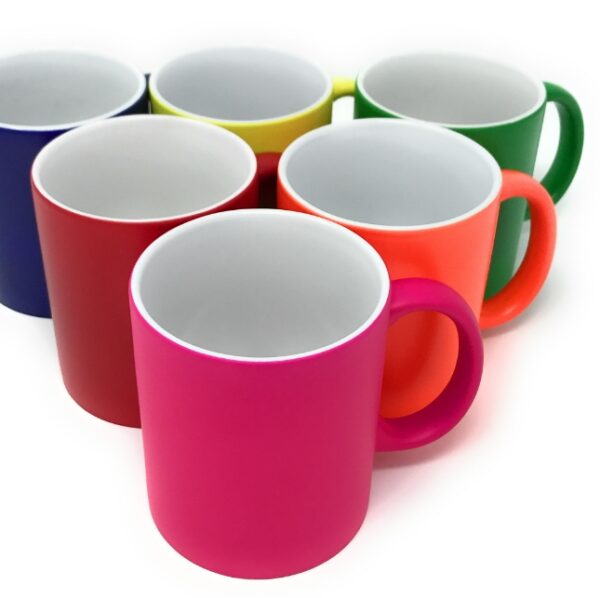
Abstract
An inquiry into the nature of drinkware reveals a significant distinction between sublimation mugs and their conventional counterparts. This examination posits that the primary differentiating factor is not the base material, which is often ceramic in both cases, but the presence of a specialized polymer coating on sublimation-ready products. This coating is indispensable for the dye-sublimation process, a heat transfer method that embeds ink into the surface, creating a permanent, high-resolution image. Regular mugs lack this receptive layer, rendering them incompatible with sublimation printing. Consequently, the differences extend beyond mere surface treatment to encompass durability, design potential, and overall longevity of the applied artwork. A regular mug may accept other forms of customization, such as screen printing or decals, but these methods result in a surface-level application that is susceptible to wear, fading, and degradation. The analysis concludes that sublimation mugs represent a distinct category of product engineered for superior, permanent customization.
Key Takeaways
- The key difference is the special polymer coating on sublimation mugs.
- Regular mugs lack this coating and cannot absorb sublimation dyes.
- Sublimation creates permanent, photo-quality designs that will not peel or fade.
- Designs on regular mugs are topical and less durable than sublimation prints.
- Are sublimation mugs different from regular mugs? Yes, in coating, process, and durability.
- Sublimation mugs offer superior dishwasher and microwave resistance.
- Choose the mug type based on your project's need for permanence and detail.
Table of Contents
- The Core Distinction: It All Begins with the Coating
- The Science of Image Creation: A Tale of Two Processes
- Durability Under Duress: How the Mugs Withstand Daily Life
- Making the Right Choice: Economic and Application-Based Decisions
- The Expanding Universe of Sublimation: Beyond the White Ceramic Mug
- Frequently Asked Questions (FAQ)
- Conclusion
- References
The Core Distinction: It All Begins with the Coating
When I first stepped onto our factory floor over a decade ago, the air was thick with the earthy smell of clay and the heat of the kilns. I saw thousands of what looked like identical white ceramic mugs. To my untrained eye, they were all the same. My mentor, a man who had spent thirty years perfecting his craft, picked up two mugs that were indistinguishable and handed them to me. "One of these," he said, "is just a mug. The other is a canvas for a memory, a brand, a piece of art." That was my first lesson in the profound difference between a regular mug and a sublimation mug. The answer to the question, "Are sublimation mugs different from regular mugs?" is not just yes; it is a fundamental distinction that transforms a simple piece of ceramic into a vessel of permanence.
The secret, he explained, lies in something you cannot easily see or feel: a special coating. This invisible layer is the heart of sublimation, the gatekeeper that decides which mug can receive a vibrant, permanent design and which will remain, for all intents and purposes, just a mug.
What is a Regular Mug? A Look at Glaze and Firing
Let’s begin our exploration with the familiar object in your kitchen cabinet: the regular ceramic mug. To understand what makes a sublimation mug unique, we must first appreciate the construction of its conventional sibling.
A standard ceramic mug starts its life as clay, which is shaped and then fired in a kiln at extremely high temperatures. This initial firing, known as a bisque firing, turns the pliable clay into a hard, porous ceramic body. However, this bisque-fired piece is not yet suitable for holding your morning coffee, as it would absorb the liquid.
To make it waterproof and give it a smooth, often glossy finish, the mug is coated in a glaze. This glaze is essentially a type of liquid glass. When the mug is fired a second time at an even higher temperature, the glaze melts, fuses, and hardens into a non-porous, durable layer. This is the smooth surface you feel on a typical store-bought mug. It’s important to understand that this glaze is inert; its purpose is to seal the ceramic and provide a cleanable surface. It has no special properties designed to interact with inks or dyes. You could try to sublimate on a regular mug, but the gaseous ink would have nowhere to go. It would simply sit on the surface of the hard, glassy glaze and wipe right off once cooled.
The "Magic" Ingredient: Deconstructing the Sublimation Coating
Now, let's turn to the sublimation mug. It often starts as the very same bisque-fired ceramic body. The divergence occurs at the next stage. Instead of a standard glaze, the mug is treated with a specially engineered polymer coating. This coating is the defining feature.
Think of this polymer coating as a layer of microscopic, heat-sensitive pores. At room temperature, this surface feels just as smooth and solid as a regular mug. But when subjected to the high heat of a mug press (typically around 200°C or 400°F), the polymers in the coating "open up."
Simultaneously, the solid dye inks on the sublimation transfer paper, when heated, undergo a phase change directly from a solid to a gas, bypassing the liquid stage entirely. This is the "sublimation" in dye-sublimation. This gaseous dye is then drawn into the now-receptive pores of the polymer coating. As the mug cools, the pores "close," trapping the dye particles permanently within the coating itself. The ink is not on the surface; it is in the surface. This distinction is the source of all the subsequent benefits of sublimation, from durability to visual brilliance. The question of whether sublimation mugs are different from regular mugs finds its most definitive answer right here, at the molecular level.
A Manufacturer's Perspective on Coating Application
As a company that has navigated the transition from domestic supply to direct international export, we have an intimate understanding of how critical this coating process is. On our production lines, we have three dedicated sublimation spraying lines to ensure this process is executed with absolute precision.
The liquid polymer coating must be applied with perfect uniformity. Any inconsistency—a drip, a thin spot, or an area with too much coating—will result in a flawed final print. A thin spot won't have enough polymer to absorb the dye, leading to a faded or blotchy area in the image. A thick spot or drip can cause the image to appear blurry or distorted.
Quality control is relentless. We monitor the viscosity of the coating, the pressure of the sprayers, the speed of the conveyor, and the temperature and humidity of the workshop environment. Each mug is inspected for a flawless, even coat before it is allowed to cure and proceed to packaging. This meticulous attention to detail ensures that every "blank" mug we produce is a perfect canvas, ready to deliver the vibrant, permanent results our customers expect. It is a far more complex and sensitive process than applying a simple ceramic glaze.
Can You Feel the Difference?
A common question we receive is whether you can feel the polymer coating and distinguish a sublimation mug from a regular one just by touch. For the vast majority of high-quality sublimation mugs, the answer is no. The coating is applied as an incredibly thin, clear layer that cures into a hard, smooth finish virtually indistinguishable from a standard glaze.
However, a highly discerning individual might occasionally notice a very subtle difference in the tactile feedback or the way light reflects off the surface. Sometimes, the polymer-coated surface can feel almost "softer" or have a slightly different sheen compared to the hard, glassy feel of a traditional ceramic glaze. Furthermore, lower-quality sublimation mugs might have imperfections like tiny bumps or an uneven finish that you can feel.
Ultimately, the only certain way to know is to test it. If you attempt to sublimate an image and it transfers perfectly, you have a sublimation mug. If it smudges and wipes away, you have a regular mug. This functional test provides the clearest answer to the query: are sublimation mugs different from regular mugs?
The Science of Image Creation: A Tale of Two Processes
The divergence between these two types of mugs becomes even more apparent when we examine how a design is applied. The coating on a sublimation mug enables a unique and scientifically elegant process, while a regular mug is limited to more traditional, surface-level techniques. This difference in process directly dictates the quality, appearance, and permanence of the final product. Imagine trying to paint a masterpiece. A sublimation mug is like a perfectly primed gesso canvas, ready to absorb and meld with the paint. A regular mug is like a sheet of glass; you can put paint on it, but it will never truly become part of the material.
A Deep Dive into Dye-Sublimation
The process of dye-sublimation is a beautiful marriage of chemistry and physics. It feels like a small miracle every time we see it happen.
- The Design and Print: First, a design is created digitally. It is then printed onto special sublimation transfer paper using sublimation inks. These inks are not like the liquid inks in your desktop printer; they are composed of solid dye particles suspended in a liquid carrier.
- The Transfer: The printed paper is wrapped tightly around the sublimation mug, with the printed side against the polymer-coated surface. It's secured with heat-resistant tape.
- Heat and Pressure: The mug is then placed into a heat press. The press applies consistent pressure and heats the mug to a precise temperature, usually around 180-200°C (350-400°F).
- The Magic of Sublimation: This is where the science happens. The heat causes two things to occur simultaneously. First, the pores of the mug's polymer coating expand, becoming receptive to the dye. Second, the solid dye particles on the paper heat up so rapidly that they turn directly into a gas (sublimate).
- Infusion and Permanence: The pressure from the press forces this gaseous dye into the open pores of the coating. Once the heat is removed and the mug begins to cool, the polymer pores shrink, permanently trapping the dye now-solidified particles within the surface of the mug.
The result is a design that is not sitting on top of the mug. It is infused into the coating. If you run your finger over the design, you feel nothing but the smooth surface of the mug itself. The image has become a part of the mug.
Printing on Regular Mugs: The Limitations of Surface-Level Methods
So, how do you get a logo on a regular mug? You must use methods that apply ink or a design to the top of the sealed, non-porous glaze. The most common methods are screen printing and decal application.
-
Screen Printing: In this process, a mesh screen is used to transfer a layer of ceramic ink onto the surface of the mug, one color at a time. The mug is then fired in a kiln at a lower temperature. This firing helps the ink adhere to the glaze, but it does not infuse into it. The design is essentially a very thin, hardened layer of paint sitting on top of the glaze. It's durable to an extent but is prone to scratching and can be worn away over time with repeated washing, especially with abrasive sponges. It is also limited to simple, solid-color designs and cannot reproduce photographic detail.
-
Decal Application: Another method involves printing a design onto special decal paper. This decal is then applied to the mug with water and fired in a kiln. Like screen printing, this process affixes the design to the surface of the glaze. While it can achieve more detail than screen printing, the decal is still a separate layer on top of the mug and can be felt as a slight ridge. Over time, the edges can begin to peel, and the design can chip or fade, particularly in a dishwasher.
The fundamental limitation of these methods is that the design is an addition to the mug's surface, making it vulnerable. The core of the issue of whether sublimation mugs are different from regular mugs lies in this distinction: infusion versus application.
Table 1: Comparison of Mug Printing Techniques
| Feature | Dye-Sublimation | Screen Printing | Decal Application |
|---|---|---|---|
| Mug Type Required | Polymer-coated sublimation mug | Regular ceramic mug | Regular ceramic mug |
| Process | Ink turns to gas and infuses into the coating | Ink is applied to the surface through a screen | A printed decal is applied and fired onto the surface |
| Image Quality | Full color, photographic, continuous tones | Solid colors, simple graphics, no gradients | Can achieve more detail, but may have a visible edge |
| Feel of Design | Perfectly smooth, cannot be felt | Slightly raised, can be felt | Slightly raised, edges may be perceptible |
| Hållbarhet | Extremely high; dishwasher & microwave safe | Moderate; can scratch or fade over time | Moderate to low; can peel, chip, or fade |
| Best For | Personalized gifts, photos, complex logos, branding | Simple logos, text, large runs of one-color designs | More intricate designs than screen printing, small batches |
Durability Under Duress: How the Mugs Withstand Daily Life
The theoretical differences in the printing processes are interesting, but what truly matters to the end-user—whether it's a family enjoying a personalized gift or a company distributing branded merchandise—is how the mug holds up in the real world. In our experience, this is where the superiority of sublimation becomes undeniable. The answer to "Are sublimation mugs different from regular mugs?" is shouted from the rooftops after a year of daily use and washing.
Dishwasher and Microwave Safety: The Real-World Test
One of the most common questions we receive from clients is about durability, specifically concerning dishwashers and microwaves.
-
Sublimation Mugs: Because the dye is infused into the polymer coating and protected by it, a high-quality sublimation mug is exceptionally resistant to the harsh environment of a modern dishwasher. The high heat, powerful water jets, and strong detergents will not cause the image to fade, peel, or wash away. We have mugs in our office that have been through hundreds of dishwasher cycles over several years, and the images are as crisp and vibrant as the day they were printed. They are also perfectly microwave-safe, as the design is an integral part of the mug and contains no metallic elements.
-
Regular Mugs with Surface Prints: The story is quite different here. Screen-printed and decal-applied designs are on the surface, exposed to the full force of the dishwasher. The abrasive nature of dishwasher detergents can slowly eat away at the design, causing it to fade and lose its luster. The high heat can cause decals to crack or their edges to lift and peel. While some higher-quality surface prints are labeled "dishwasher-safe," this often means they will withstand a certain number of washes on the top rack before showing significant wear. They are simply not in the same league of permanence as a sublimated mug.
Scratch and Fade Resistance
Life is full of bumps and scrapes, and a coffee mug is no exception. Think about it being stacked in a cupboard, stirred with a metal spoon, or scrubbed a little too vigorously.
The sublimated design is protected by the hard polymer topcoat. To scratch the image, you would first have to scratch through that durable layer. This makes the design incredibly resistant to everyday scratches from utensils, rings, or stacking.
In contrast, a screen-printed design is the outermost layer. It is directly exposed and can be scratched off with a sharp object or abrasive cleaning pad, revealing the glaze underneath. The difference is akin to a painting protected behind a sheet of glass versus a painting with no protection at all.
Furthermore, the dyes used in sublimation are inherently more resistant to UV light than many inks used for surface printing, meaning a sublimated image is less likely to fade over time if left in a sunny spot on a desk.
The Lifespan of a Design: Investing in Permanence
When a business invests in promotional products or a person creates a personalized gift, they are investing in the message or memory the item carries. A faded, peeling, or scratched logo on a corporate mug sends a poor message about the quality of the brand. A cherished family photo on a mug that disappears after a few dozen washes is a deep disappointment.
Choosing a sublimation mug is an investment in permanence. The design will last for the functional lifetime of the mug itself. The mug may break if dropped, but the design will not fade away. This longevity provides immense long-term value. While the initial blank sublimation mug might cost slightly more than a regular blank mug, the durability and quality of the final product more than justify the marginal difference in price. This is a key consideration for anyone trying to understand if sublimation mugs are different from regular mugs from a value perspective.
Making the Right Choice: Economic and Application-Based Decisions
Understanding the technical and durability differences is crucial, but the decision of which mug to use ultimately comes down to practical considerations: your specific project, your budget, and your desired outcome. As a manufacturer that produces a wide array of custom ceramic mugs, we guide our clients through this decision-making process every day. There is no single "best" mug for every situation; there is only the right mug for your situation.
Cost Analysis: Upfront vs. Long-Term Value
At first glance, a simple cost comparison seems to favor the regular mug. A blank, unprinted regular ceramic mug is generally cheaper to produce and purchase than a blank sublimation mug. The additional step of applying and curing the specialized polymer coating adds a cost to the sublimation blank.
However, this only tells part of the story. You must consider the total cost of the finished product and its long-term value.
- For simple, one or two-color logos in very large quantities (thousands of units), screen printing on regular mugs can be more cost-effective. The setup costs for screen printing are high, but the cost per mug becomes very low on large runs.
- For full-color images, photographs, complex logos with gradients, or smaller quantity orders, sublimation is almost always the more economical choice. Screen printing would require a separate screen for each color, making complex designs prohibitively expensive. Sublimation allows for unlimited colors and photographic detail in a single press, with no extra setup cost per color.
Then, there is the value of longevity. If a company gives away 1,000 screen-printed mugs that start to look worn after a year, the brand's image suffers. If they invest a little more in 1,000 sublimated mugs that look pristine for five years or more, the cost-per-impression of their brand is significantly lower, and the perceived quality is much higher. The question transitions from "Are sublimation mugs different from regular mugs?" to "What is the long-term value I want to achieve?"
Table 2: Choosing the Right Mug for Your Project
| Your Project Goal | Recommended Mug Type | Key Rationale |
|---|---|---|
| Personalized Gift with a Photo | Sublimation Mug | Only sublimation can produce vibrant, permanent, full-color photographic results. |
| Corporate Giveaway (Complex, Full-Color Logo) | Sublimation Mug | Economical for complex logos, offers premium look and feel, and durability reflects brand quality. |
| Small Business Merchandise (e.g., Etsy Shop) | Sublimation Mug | No minimum order size, allows for on-demand printing of diverse and intricate designs. |
| Restaurant/Café Use (Unbranded) | Regular Mug | Lowest upfront cost for bulk purchase where no custom design is needed. |
| Promotional Event (Simple, 1-Color Logo, 5000+ units) | Regular Mug (Screen-Printed) | Most cost-effective method for very large quantities of simple, single-color designs. |
| Durable Outdoor/Travel Mug | Metal or Enamel Sublimation Mug | Combines the permanence of sublimation with the shatterproof nature of metal for rugged use. |
Use Cases: When to Choose a Sublimation Mug
Based on the table above, the ideal scenarios for choosing a sublimation mug become clear. You should opt for sublimation when:
- Image Quality is Paramount: You need to reproduce a photograph, a painting, or a logo with intricate gradients and a wide range of colors.
- Durability is a Non-Negotiable: The item is intended for daily, long-term use and must withstand dishwashers, microwaves, and general wear and tear. This is essential for corporate branding and high-quality gifts.
- You Need On-Demand or Small-Batch Production: The sublimation process is perfect for creating one-offs or small runs, as there are no significant setup costs associated with design complexity. This has empowered a massive community of small businesses and crafters.
- You Desire a Premium, Seamless Finish: You want a design that feels like it is part of the mug itself, with no raised edges or textures.
Use Cases: When a Regular Mug Suffices
A regular, non-sublimation mug is still a perfectly valid choice in several situations:
- Cost is the Sole Driver for Bulk Orders: If you are a café, hotel, or institution that needs hundreds of plain, unbranded mugs, the lower per-unit cost of regular mugs is the logical choice.
- Your Design is Extremely Simple: For massive promotional campaigns requiring tens of thousands of mugs with a simple, one-color text or logo, the economics of screen printing on regular mugs can be more favorable.
- The Item is for Temporary or Low-Impact Use: If the mug is for a single event and long-term durability is not a concern, a cheaper printing method on a regular mug might suffice.
The choice is an exercise in matching the tool to the task. Understanding the fundamental ways in which sublimation mugs are different from regular mugs empowers you to make an informed decision that aligns with your goals for quality, longevity, and budget.
The Expanding Universe of Sublimation: Beyond the White Ceramic Mug
When people first learn about sublimation, they often picture the classic 11oz white ceramic mug. For many years, that was indeed the cornerstone of the industry. But as technology has advanced and manufacturers like us have innovated, the world of sublimation "blanks"—the uncoated or pre-coated items ready for printing—has exploded with diversity. The core principle remains the same: the item must either be made of a polymer or be coated with one. This has opened up a thrilling range of possibilities far beyond the standard coffee cup. Exploring these options reveals just how versatile the sublimation process truly is.
Ceramic Sublimation Mugs: The Industry Standard
Ceramic remains the king of the sublimation world due to its excellent heat retention, satisfying weight, and classic appeal. But even within the ceramic category, there is a wonderful variety.
- White Mugs: The workhorse of the industry. The bright white surface provides the perfect neutral background for colors to pop, ensuring the most accurate and vibrant image reproduction. They come in various sizes, from small 3oz espresso cups to large 15oz or 20oz mugs.
- Color Mugs: These mugs feature a colorful interior or handle, with a white, polymer-coated exterior panel for the sublimation image. This allows for a fun pop of color that can complement the design. Some mugs, like our inner rim color mugs, offer a subtle, stylish contrast.
- Magic Mugs (Color-Changing Mugs): These are a constant source of delight. They appear as a solid color (usually black) at room temperature. But when hot liquid is poured in, the heat-sensitive outer layer becomes transparent, magically revealing the sublimated image beneath. It’s a fantastic novelty for gifts.
- Patch Mugs: These are fully colored mugs that have a specific white, polymer-coated "patch" or window designated for sublimation. This creates a framed effect, where your design appears on a colored background.
The Elegance of Glass: Sublimating on Transparent and Frosted Surfaces
Sublimating on glass presents a unique aesthetic. Since glass itself is not a polymer, it must be coated just like ceramic. The results can be stunning.
- Frosted Glass Mugs: These are perhaps the most popular type of sublimation glass. The frosted finish gives the glass a soft, ethereal look and provides a semi-opaque surface that helps the sublimated colors appear more vibrant than they would on clear glass. The design takes on a gentle, slightly translucent quality that is very elegant.
- Clear Glass Mugs: Sublimating on clear glass is also possible. The inks themselves are transparent, so the image will have a stained-glass effect. This works best with bold, dark colors, as lighter colors can appear washed out without a white background to support them.
- Glass Beer Steins and Mason Jars: The application extends to other popular glassware, allowing for personalized beer mugs for breweries or custom mason jars for rustic-themed events.
The Durability of Metal: Stainless Steel, Aluminum, and Enamel Mugs
For travel, camping, or just a more rugged, industrial aesthetic, metal sublimation blanks are an excellent choice. Like ceramic and glass, they must be polymer-coated.
- Stainless Steel Tumblers and Travel Mugs: These are incredibly popular for their durability and insulation properties. A sublimated design on a stainless steel travel mug will not peel or scratch off, even when tossed in a backpack, making it a far superior choice to a travel mug with a simple sticker or decal.
- Aluminum Water Bottles: Lightweight and durable, these are perfect for sports teams, gyms, and corporate wellness programs. The sublimation process allows for brilliant, full-wrap designs.
- Enamel Mugs: These have a wonderful, retro charm. They consist of a steel core coated with enamel and then a final polymer layer for sublimation. They are shatterproof and lightweight, making them ideal for camping and outdoor use. The sublimation print is far more resilient than the screen printing typically found on older enamelware.
The ability to create permanent, full-color designs on such a wide range of materials is a testament to the power of the sublimation process. Whether you need the classic feel of ceramic, the elegance of glass, or the ruggedness of metal, there is a sublimation solution available. It reinforces that the critical question is not just "Are sublimation mugs different from regular mugs?" but also "What is the best material for sublimation mugs for my specific need?" The answer is broader and more exciting than ever before.
Frequently Asked Questions (FAQ)
1. Can I just buy a regular mug from a store and sublimate on it?
No, you cannot. A regular mug purchased from a retail store lacks the essential polymer coating required for the sublimation process. The sublimation ink needs this special layer to bond with. If you try to press a design onto a regular mug, the ink will not transfer correctly and will simply wipe or wash off.
2. Is the polymer coating on sublimation mugs safe to drink from?
Yes, absolutely. High-quality sublimation mugs from reputable manufacturers use polymer coatings that are formulated to be food-safe and non-toxic. Once the image is sublimated, the design is permanently infused into this hardened, inert coating. These mugs are perfectly safe for daily use with both hot and cold beverages.
3. Why are sublimation mugs more expensive than regular mugs?
Sublimation mugs are slightly more expensive due to the additional manufacturing step of applying and curing the specialized polymer coating. This process requires precision equipment, quality control, and specific materials that are not needed for producing a standard ceramic mug with a simple glaze.
4. How can I tell if a mug is a sublimation mug without testing it?
Visually and by touch, it is very difficult to distinguish a high-quality sublimation mug from a regular one. The most reliable way is to check with the supplier or look for a description that explicitly states it is a "sublimation blank" or "poly-coated." If you're buying mugs for a sublimation project, always purchase them from a trusted sublimation supplies vendor.
5. Is a sublimated design really permanent?
Yes, for all practical purposes, a sublimated design is permanent. The ink is not on the surface but has been embedded into the mug's coating. This means it will not peel, crack, or wash away. It is highly resistant to scratching and is both dishwasher and microwave safe. The design will last for the entire functional life of the mug.
Conclusion
The journey from a simple lump of clay to a finished coffee mug is one of heat, pressure, and transformation. Yet, as we have explored, a subtle but crucial divergence in this journey creates two fundamentally different products. The question "Are sublimation mugs different from regular mugs?" can be answered with a resounding yes. The difference is not one of quality in the base material, but one of purpose, chemistry, and potential.
The regular mug is a finished product, sealed by its inert glaze, content to simply hold a beverage. The sublimation mug, by contrast, is a canvas. Its specialized polymer coating is an invitation—an engineered surface waiting to react with heat and pressure to permanently capture a moment, a brand, or a piece of art. This distinction gives rise to all the others: the sublimation process relies on a phase change from solid to gas, infusing color deep into the surface, while other methods merely apply it to the top. This infusion grants the sublimated design a permanence and durability that screen printing or decals cannot match, allowing it to withstand the rigors of dishwashers, microwaves, and daily life without fading or peeling.
Ultimately, choosing between them is an act of aligning your intent with the object's capability. For simple, bulk needs, the regular mug serves its purpose well. But for anyone seeking to create a lasting, vibrant, and high-quality customized piece—whether for a personal gift, a small business, or a corporate brand—the sublimation mug is, without question, the superior and necessary choice.
References
Toposi. (2024a). Ceramic sublimation mugs. Zibo Toposi International Trade Co., Ltd. https://www.topsub.cn/category/ceramic-sublimation-mugs/
Toposi. (2024b). Color mugs. Zibo Toposi International Trade Co., Ltd. https://www.topsub.cn/category/ceramic-sublimation-mugs/color-mugs/
Toposi. (2024c). Glass sublimation mugs. Zibo Toposi International Trade Co., Ltd. https://www.topsub.cn/category/glass-sublimation-mugs/sublimation-glass-mugs/
Toposi. (2024d). Wholesale good quality custom made ceramic mugs manufacturer wholesalers. Zibo Toposi International Trade Co., Ltd. https://www.topsub.cn/products/wholesale-good-quality-custom-made-ceramic-mugs-manufacturer-wholesalers/